Why We Chose Aluminium, Not Steel, for an Airplane Belt You Actually Wear
Real airplane seatbelts use steel. Fly-Belts uses aviation-grade aluminium. Here is why the choice matters for weight and corrosion.

Inside an aircraft, seatbelt buckles are made of forged steel. On a Fly-Belts belt, the buckle is made of aviation-grade aluminium. The choice is deliberate. Steel is roughly three times denser than aluminium. A comparable belt with a real steel buckle would be noticeably heavier and would corrode on contact with sweat. Aluminium is lighter and corrosion-resistant. Same design, better daily object.
The buckle on the safety card is not the buckle you want on your belt
Open any airline safety card. The buckle drawn on it is forged steel. It is designed for one purpose, to hold a 90 kg adult in place during an emergency deceleration of several G. Nothing in that spec sheet is about wearing it for ten hours a day on a pair of chinos.
We kept the shape. We changed the material. Here is why it matters.
Weight
Steel is roughly three times denser than aluminium. A complete Fly-Belts belt, buckle included, weighs around 200 grams. A comparable belt built with a real airplane steel buckle would weigh significantly more. Enough that you feel it at the end of the day. Our belt is light enough to forget you are wearing it, heavy enough to carry the presence of a real object on your belly.
Corrosion
Steel oxidizes. On a seat, under dry cabin air, that takes years. On skin, under summer sweat, against a white shirt, it takes weeks. You end up with a rust line on your waistband. Aviation aluminium is an alloy designed specifically for parts exposed to condensation, UV and temperature shifts. It does not rust. Ever.
Feel
Aluminium has a different acoustic signature. It does not ring. It does not clink against a metal watch or a keychain. It holds temperature less than steel, meaning it does not feel ice-cold in winter and oven-hot in summer. For an object that lives against your body all day, this is not a detail.
What we did not do
We did not use zinc. Zinc is what most cheap novelty aviation belts on the internet are made of, the ones you see at 15 to 25 euros. Zinc is 7 times weaker than aviation aluminium, cracks under stress, and pits over time. It looks close. It is not the same object.
Two things worth remembering
The complete belt weighs around 200 grams. The buckle is aviation-grade aluminium, the same material family used in aircraft body panels, which holds a tensile load that exceeds the stress of any daily belt use by a wide margin. We did not build a replica. We built a better version of a real object, calibrated for the way you actually live.
Same design as the belt you already know from every flight. Different material. Because the job is different. All eight models in the collection share the same buckle — explore The Belt, or see how two straps and one buckle travel together in The Upgrade.


Is aluminium strong enough for a belt buckle?
Yes. Aviation aluminium is used for structural parts in aircraft, including flap components and internal airframe structures. Our buckle passes tensile and fatigue tests well beyond any stress a belt would see in daily use.
Will it rust?
No. Aviation-grade aluminium does not rust. It is specifically engineered to resist corrosion in humid, saline, and high-UV environments. It will outlive the strap.
Why does the real airplane buckle use steel then?
Because its job is different. A real buckle must survive a crash deceleration of several G with a fully loaded passenger. Steel is stronger at that extreme edge. For a belt you wear every day, aluminium is the better compromise between strength, weight, corrosion and comfort.
Is it the same aluminium as a soda can?
No. Soda cans use a soft alloy optimized for forming, not strength. Fly-Belts buckles use an aluminium alloy from the family used in aircraft structural parts, selected for its higher strength and corrosion resistance.
Is aluminium heavier or lighter than it looks?
Lighter. A complete Fly-Belts belt, buckle included, weighs around 200 grams. Steel is about three times denser than aluminium, so a comparable belt with a steel buckle would be noticeably heavier. That difference is the reason you can wear the belt a full day without noticing it.
Eight routes. Eight belts. One buckle.
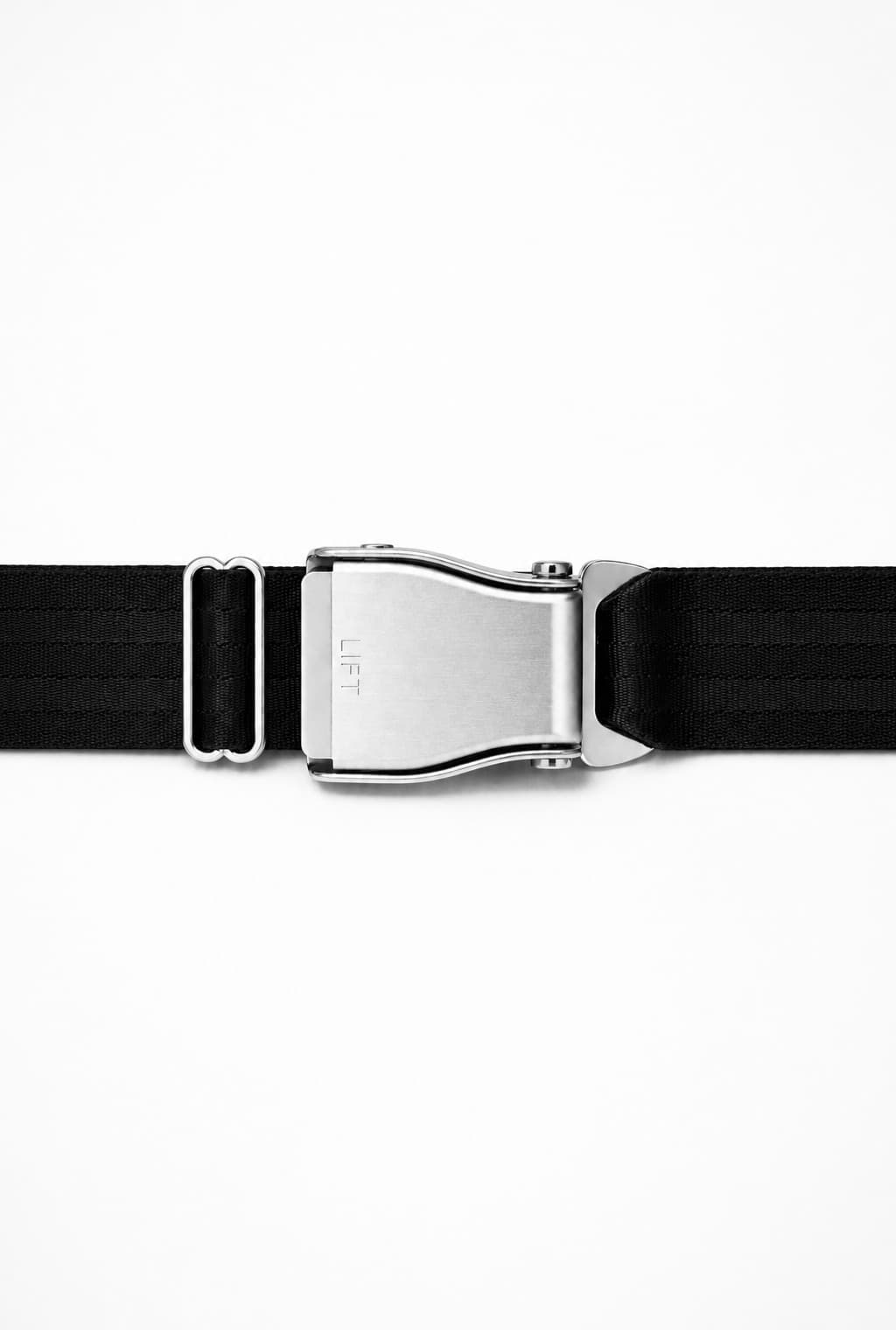
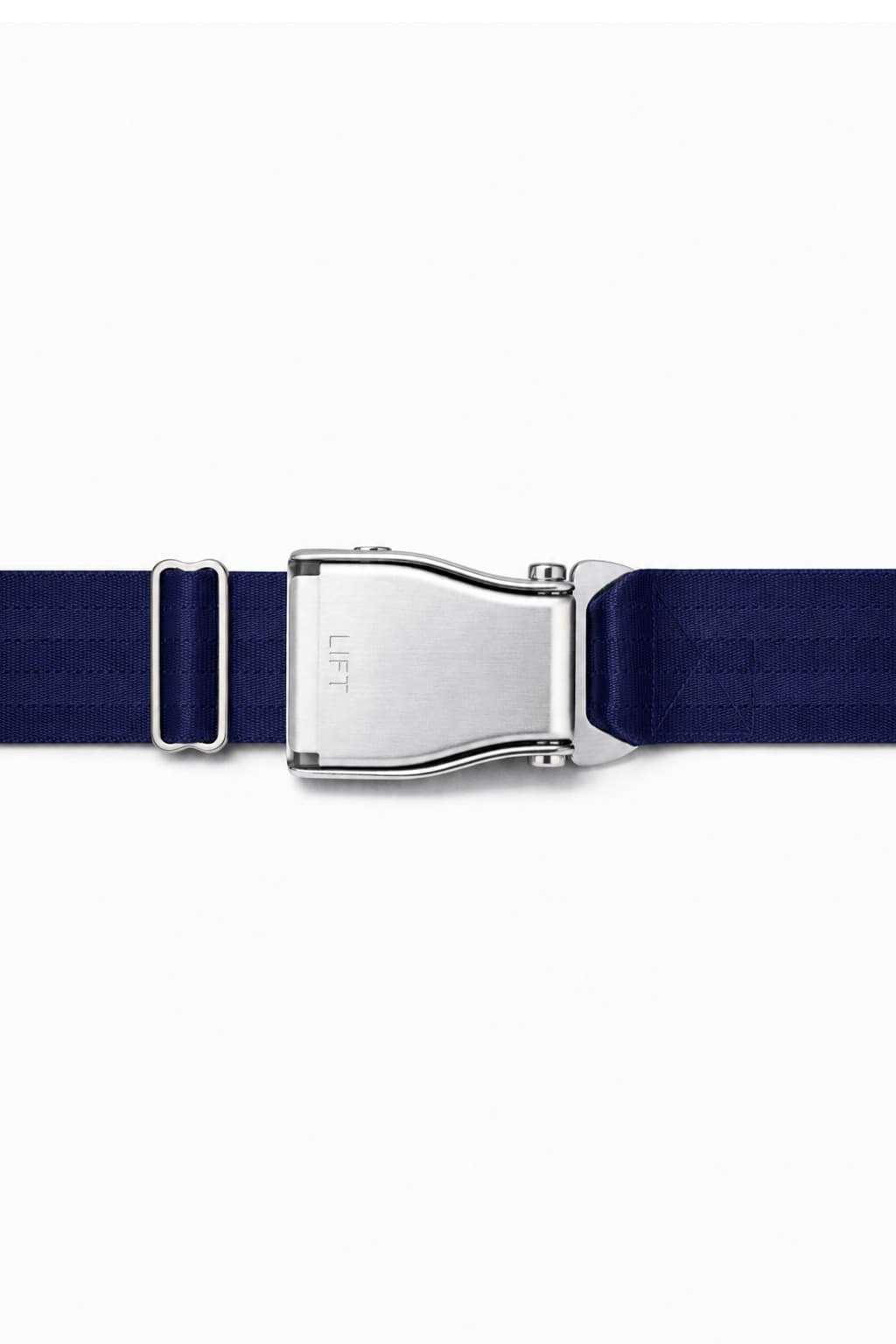
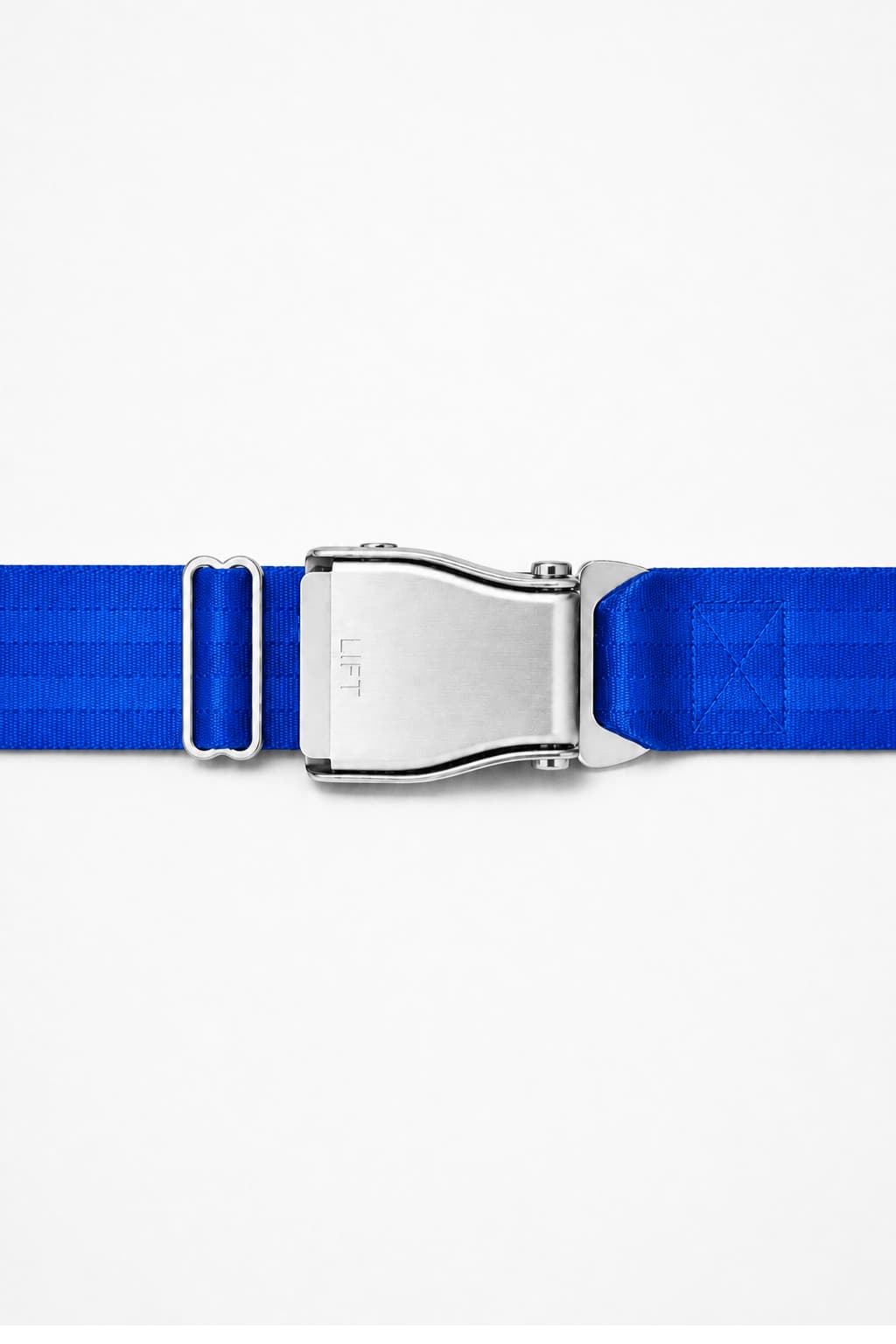
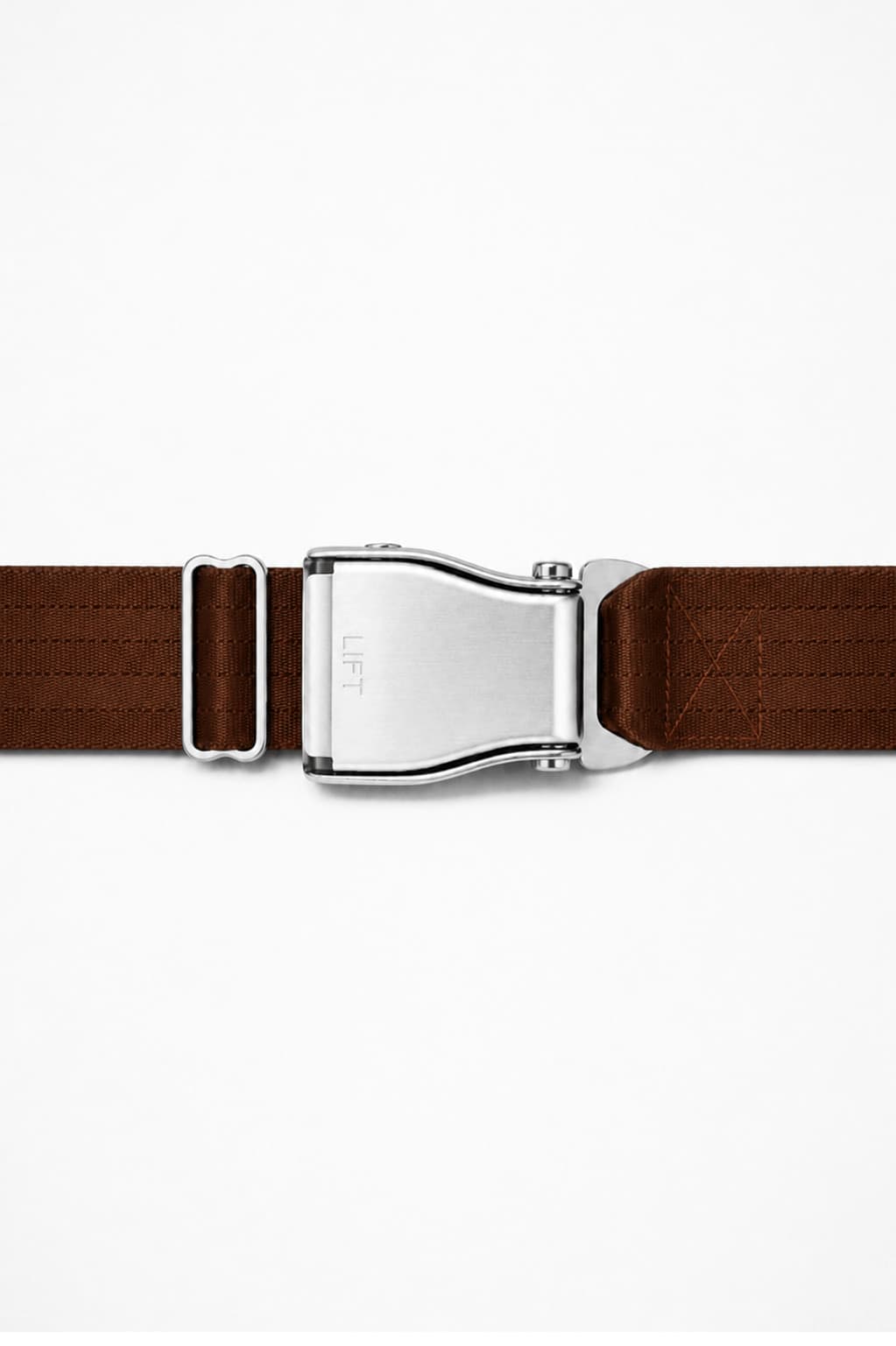
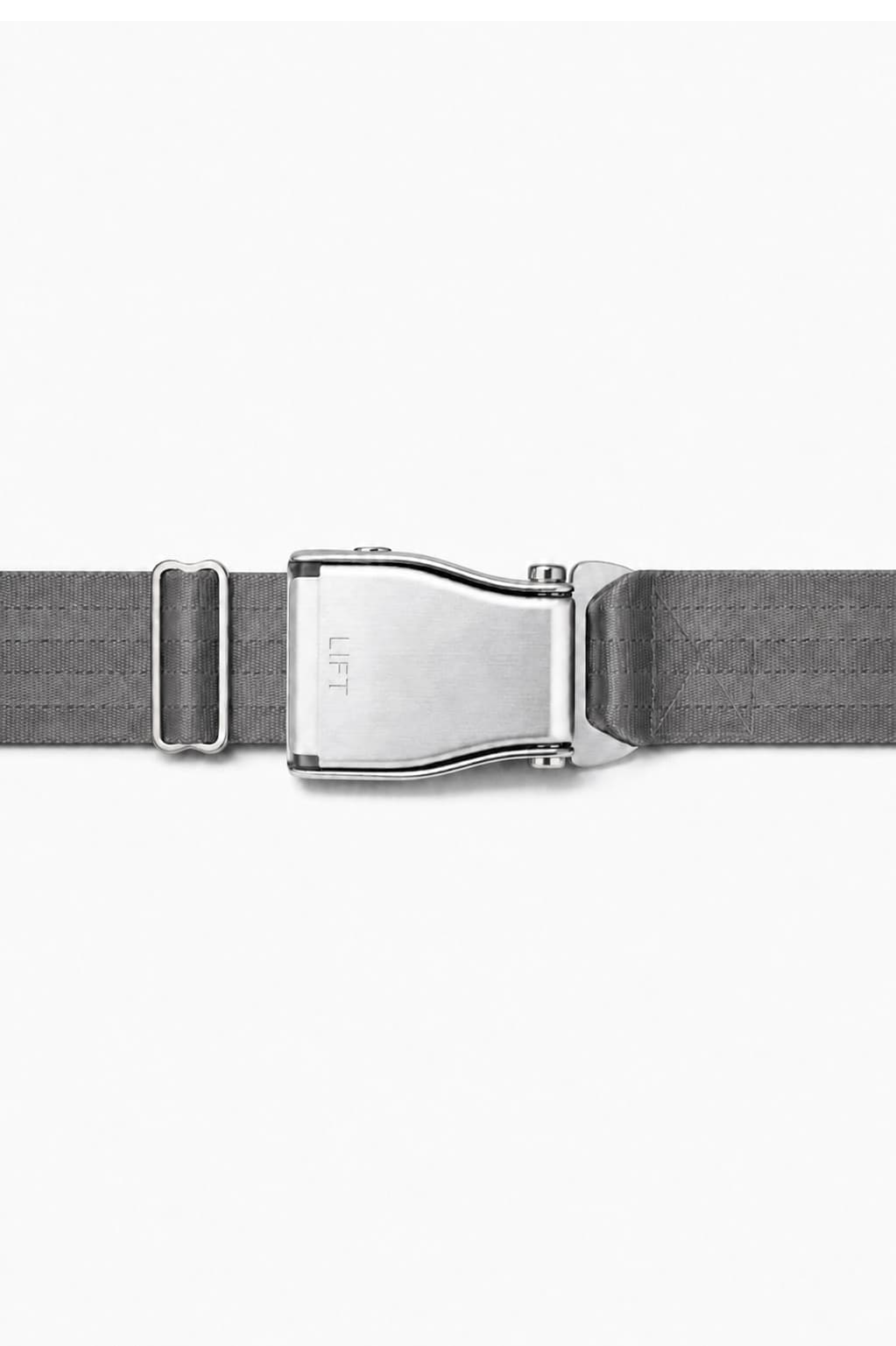
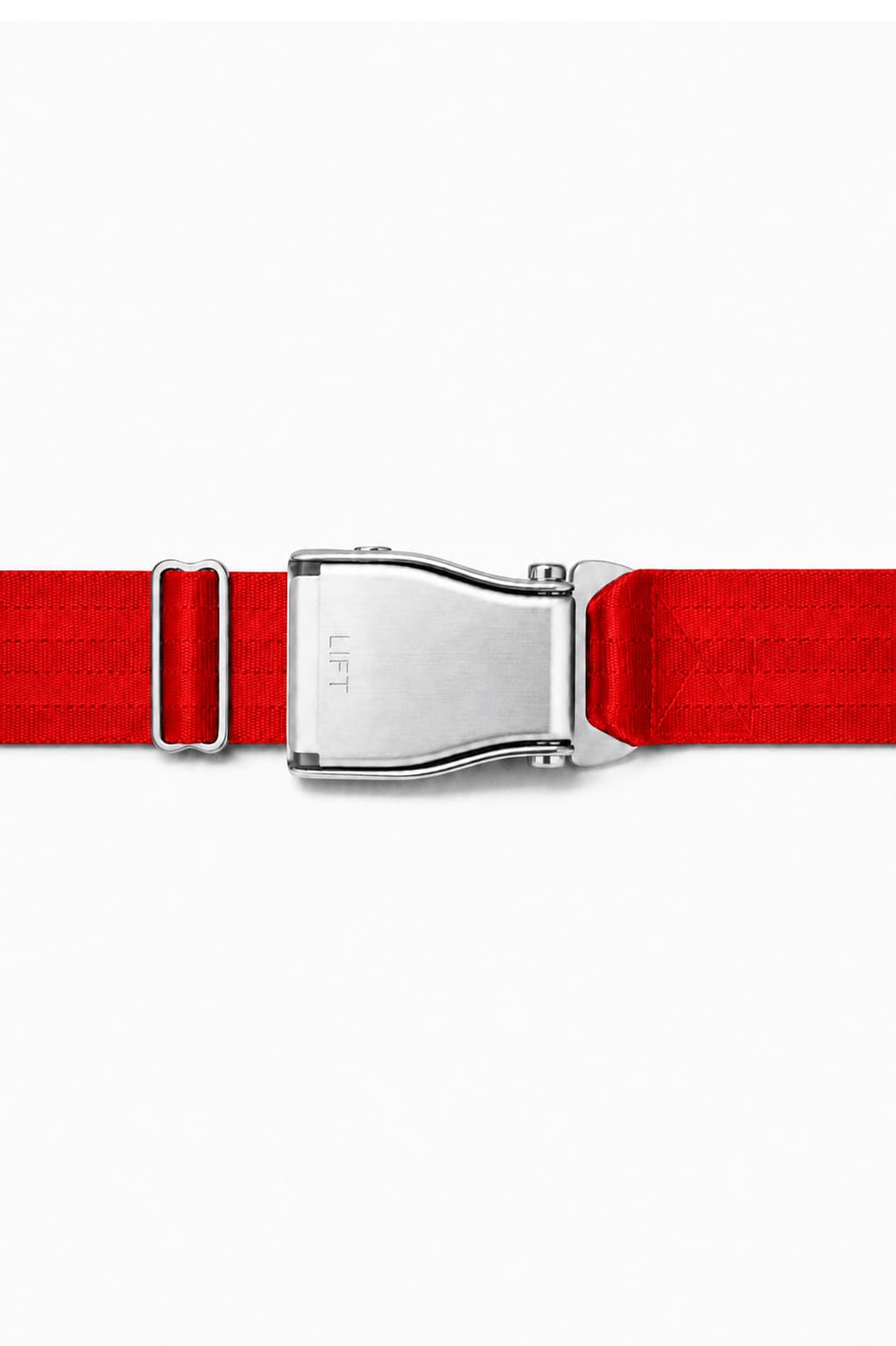
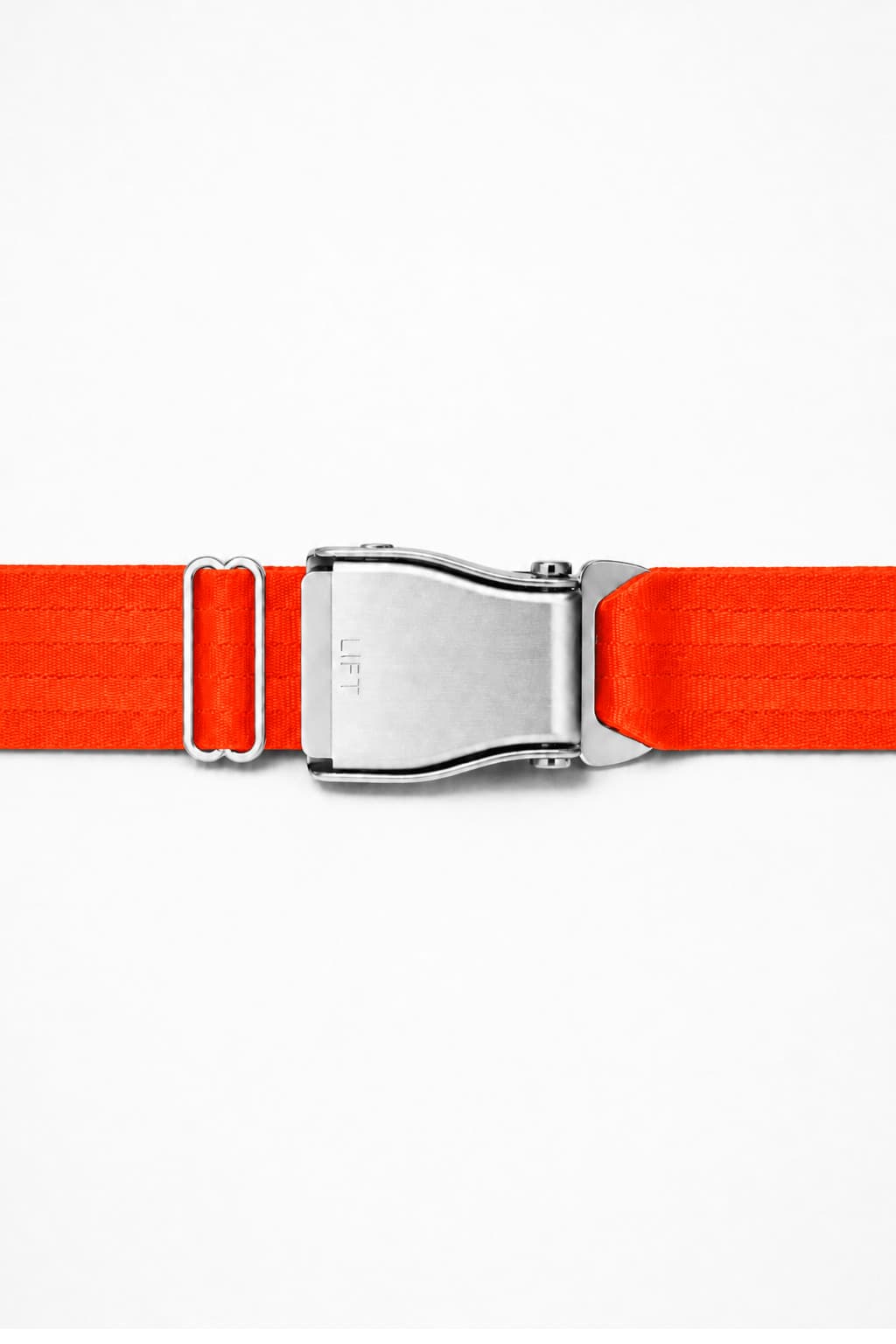
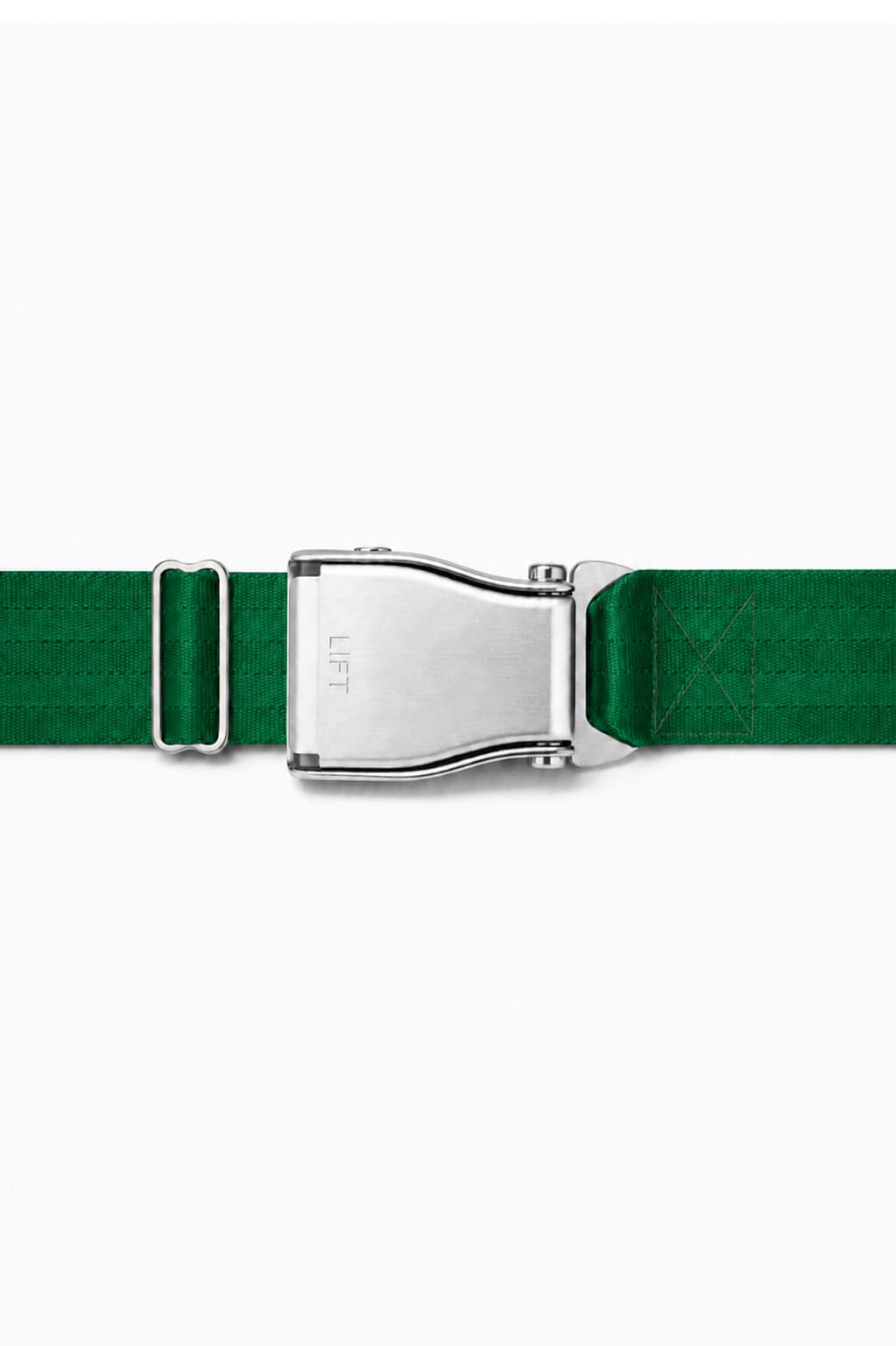
The same buckle mechanism as on board, machined in aluminium, in eight colours named after the routes that made aviation.

Why Airplane Seatbelts Have No Shoulder Strap
The dominant crash force in aviation is vertical, so a lap belt across the pelvis does the job. Here is the engineering, and the buckle.

What Is an Airplane Seatbelt Buckle Belt?
The definitive guide to aviation-inspired belts — what they are, how they work, and why frequent flyers wear them.