Why the Airplane Seatbelt Buckle Is the Most Recognized Piece of Industrial Design in the World
Four billion passengers a year interact with the same buckle mechanism. No other piece of industrial design has that reach. Here is why it deserves more attention than it gets.

Roughly four billion passengers board commercial aircraft every year. Every one of them interacts with the same object before the plane leaves the ground. They buckle it. They adjust it. They release it on landing. The gesture takes less than three seconds and requires no instruction.
That object is the airplane seatbelt buckle. And it is, by the most straightforward measure of recognition, the most widely shared piece of industrial design on the planet.
What recognition actually means in design
Design criticism tends to measure recognition through cultural visibility — the Eames chair, the London Underground map, the Braun shaver. These are objects that have earned their place in the design canon through their influence on subsequent design, their presence in museum collections, and the volume of writing produced about them.
The airplane seatbelt buckle has none of that. It has never been in a museum. It has not influenced a school of design. It is not discussed in design history courses. It sits in the cabin of every commercial aircraft on Earth and does its job without acknowledgment.
But recognition, in the most literal sense, does not require cultural prestige. It requires exposure and retention. An object you have seen and used hundreds of times, in identical form, across every airline, every aircraft type, every country you have ever flown to or from, is an object you recognize completely. You know how it works without thinking. You know what the orange tab does. You know the sound it makes.
By that measure, nothing else comes close.
The design logic behind the mechanism
The buckle works the way it works because it was designed by people whose professional obligation was to make it impossible to use incorrectly.
Aviation safety hardware is subject to a design constraint that most product categories never encounter: the end user may be panicked, disoriented, or operating in the dark. The mechanism has to function correctly under those conditions, on the first attempt, without instruction, by someone who may never have trained on it.
The press-and-lift release satisfies that constraint in an elegant way. The release motion is intuitive because it runs counter to the clamping motion: you pull the strap to tighten, you press and lift to release. The two actions cannot be confused. The buckle locks passively when the tongue is inserted; it requires active intervention to open. Under stress, this means the natural instinct to grip and pull works against accidental release rather than causing it.
This is not a coincidence of good taste. It is the result of a design discipline that treats human error as a given and builds the mechanism to survive it. The fact that the resulting object is also satisfying to handle is, as with most well-engineered things, a consequence of the engineering rather than a separate intention.
Why it has barely changed in forty years
The commercial aviation seatbelt mechanism reached its current form in the early years of wide-body aircraft and has remained substantively unchanged since. In an industry that replaces avionics systems every decade and retires aircraft after twenty years of service, the seatbelt buckle is an anomaly.
It has not changed because it did not need to. The mechanism solved the problem it was designed to solve completely enough that subsequent iterations produced no meaningful improvement. What you interact with on a flight today is functionally identical to what passengers on early 747 services interacted with in the 1970s.
There is a specific kind of design that earns this kind of permanence. It is not the design that is innovative enough to define a moment, but the design that is correct enough to survive every moment after. The folding knife. The zipper. The wheel. Objects that arrived at a form and stayed there because the form was right.
The airplane seatbelt buckle belongs in that category, and almost no one has ever said so.
What happens when you take it out of the cabin
Context is one of the most powerful forces in design perception. The same object means different things in different settings. A plastic chair in a waiting room and a plastic chair in a design museum are the same object with entirely different readings. The context does not change the object. It changes what the viewer brings to it.
The airplane seatbelt buckle spends its entire life in one context: the aircraft cabin, where it is associated with safety procedures, overhead announcements, and the specific low-grade anxiety of the moments before takeoff. Those associations are not negative, but they are powerful enough to prevent the object from being seen on its own terms.
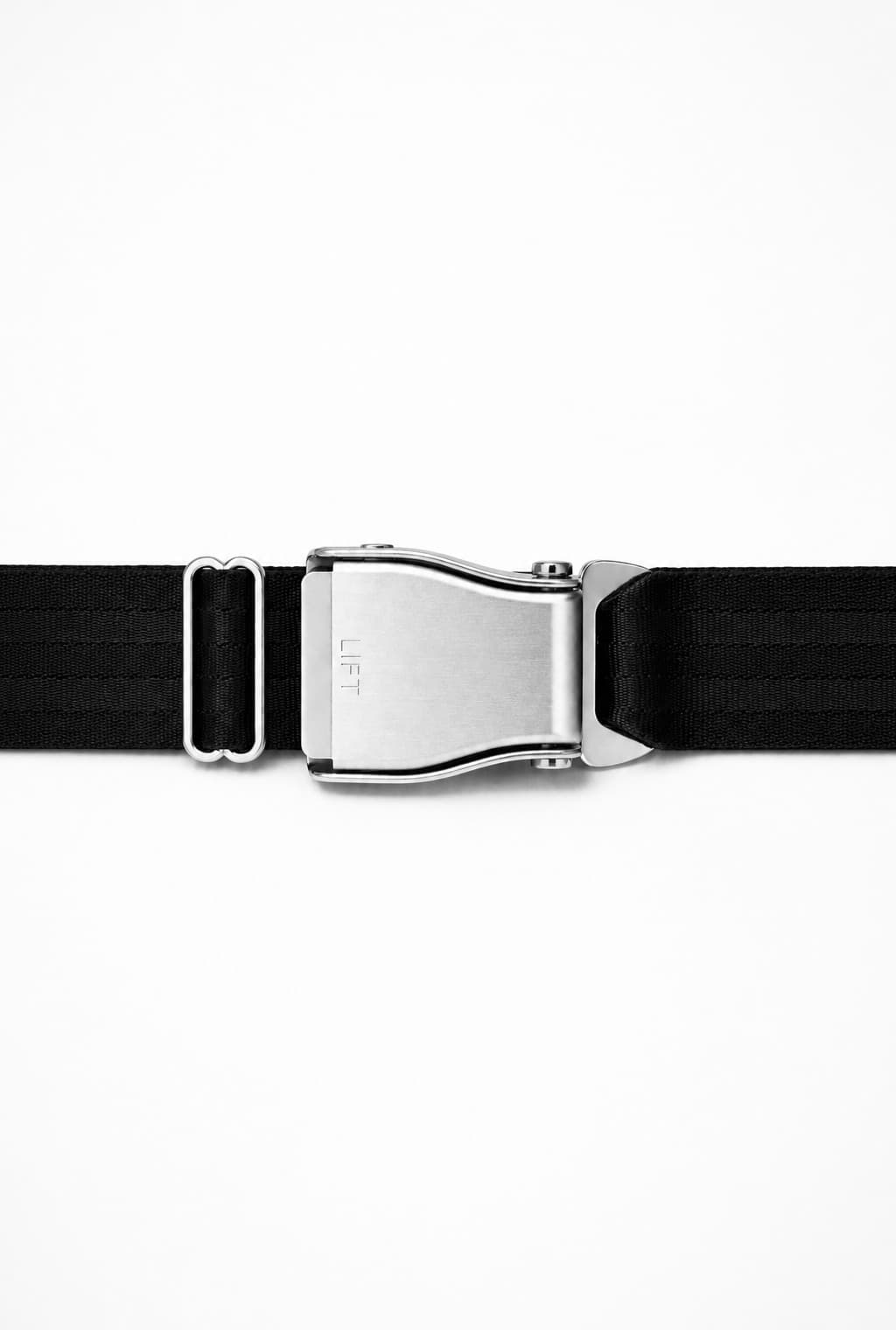
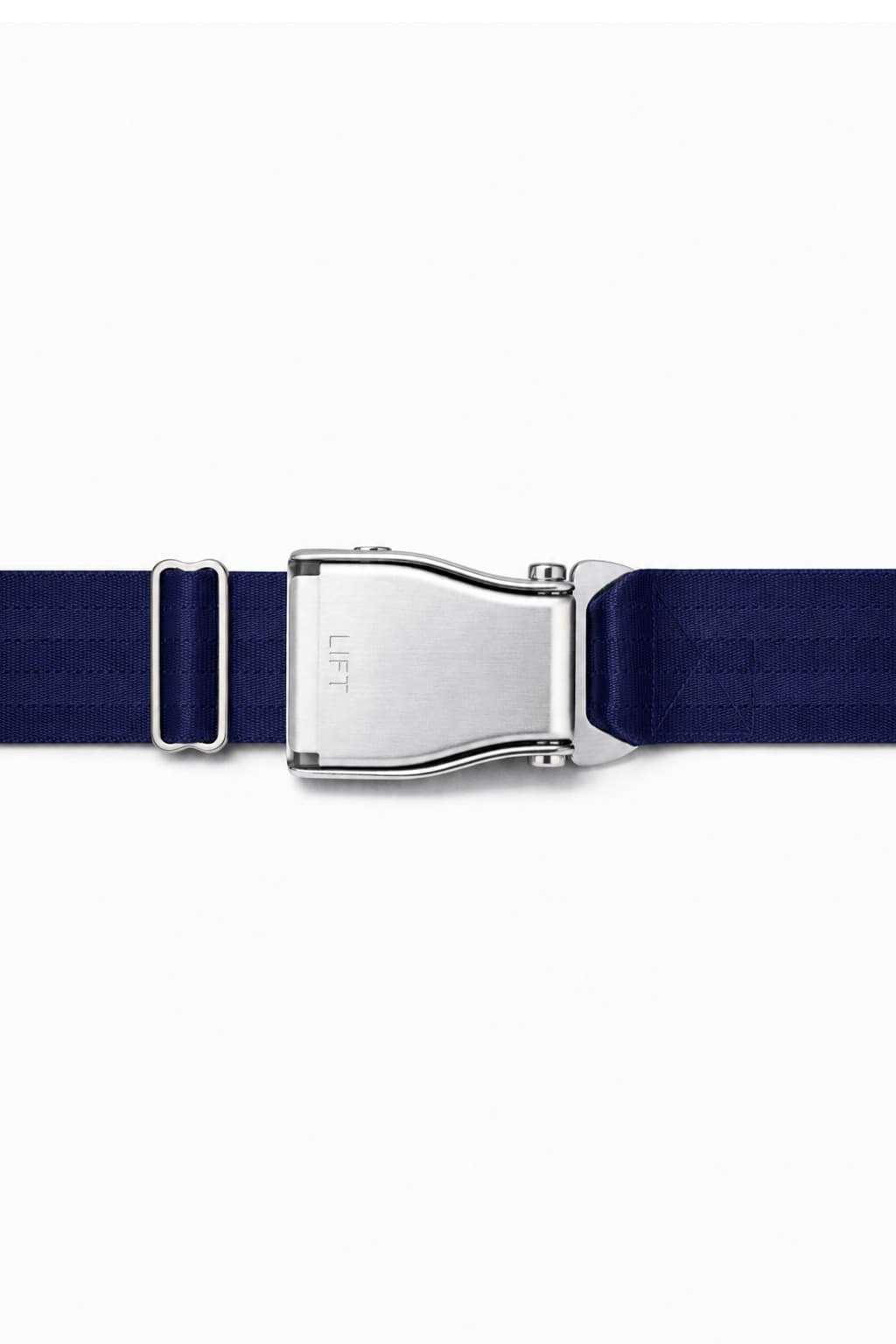
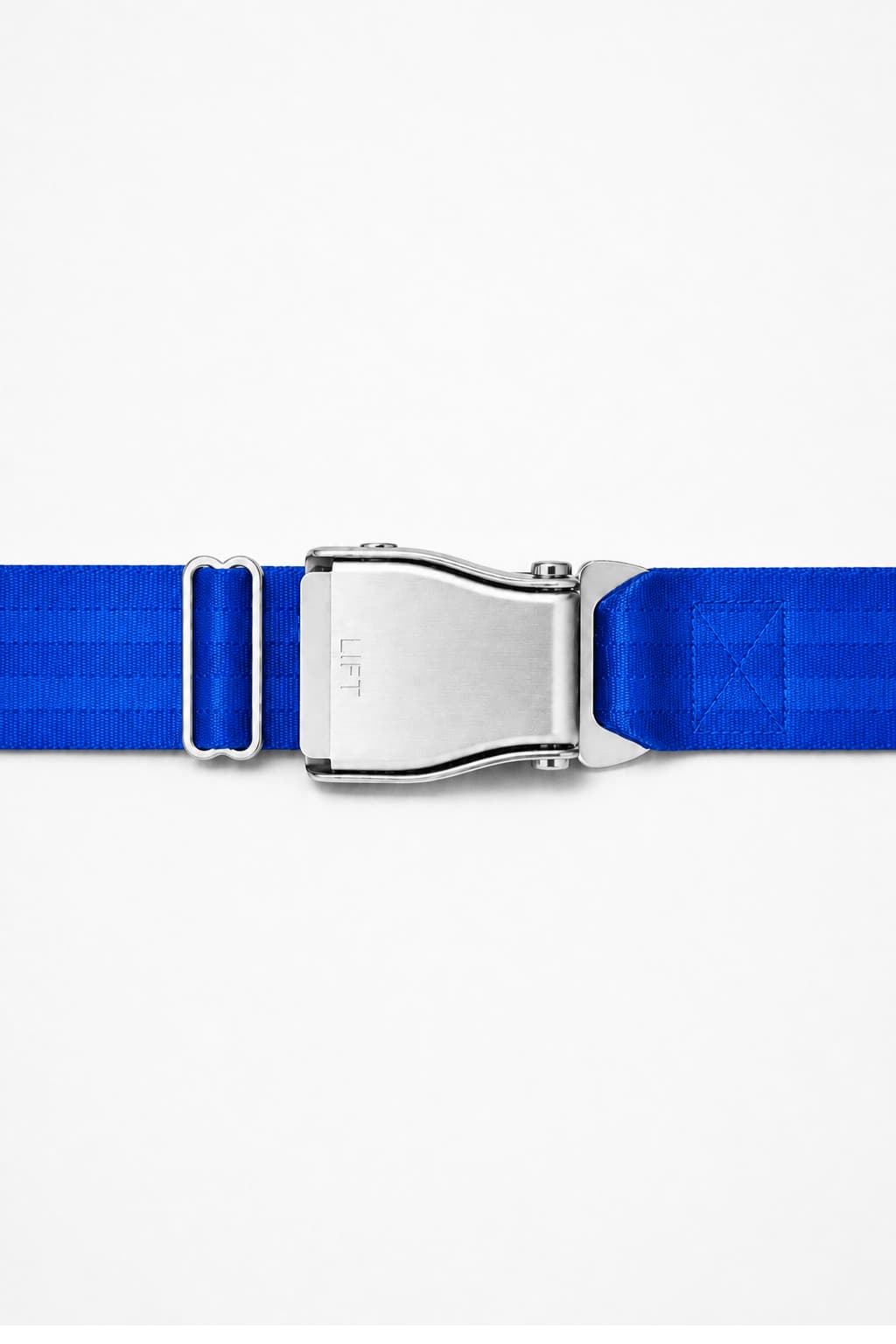
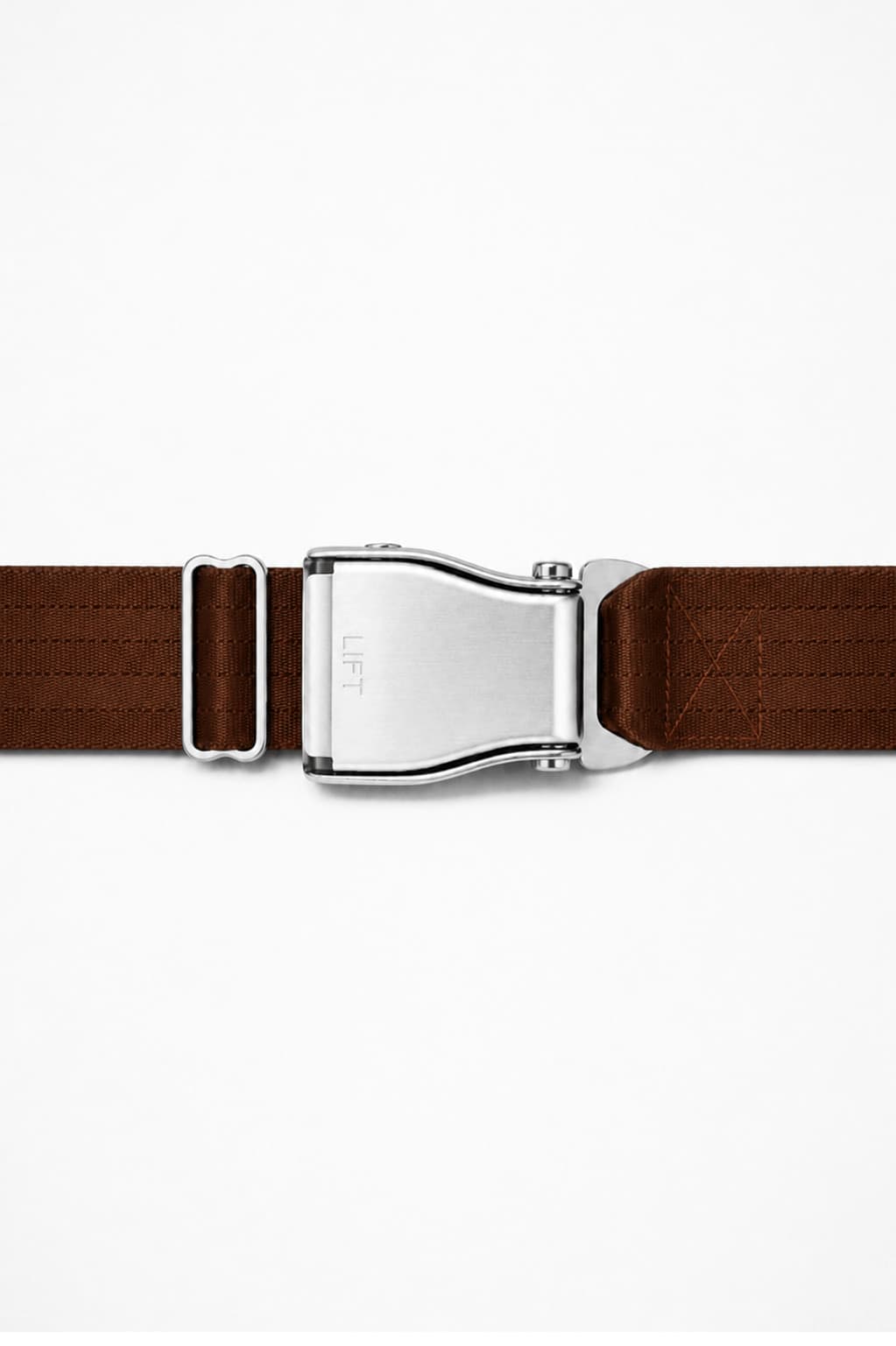
Remove it from that context and the mechanism reveals itself differently. The press-and-lift release becomes a gesture of precision rather than a preflight obligation. The aluminium hardware becomes a material choice rather than a regulatory requirement. The object becomes, simply, a very well-made piece of functional hardware with four decades of refinement behind it.
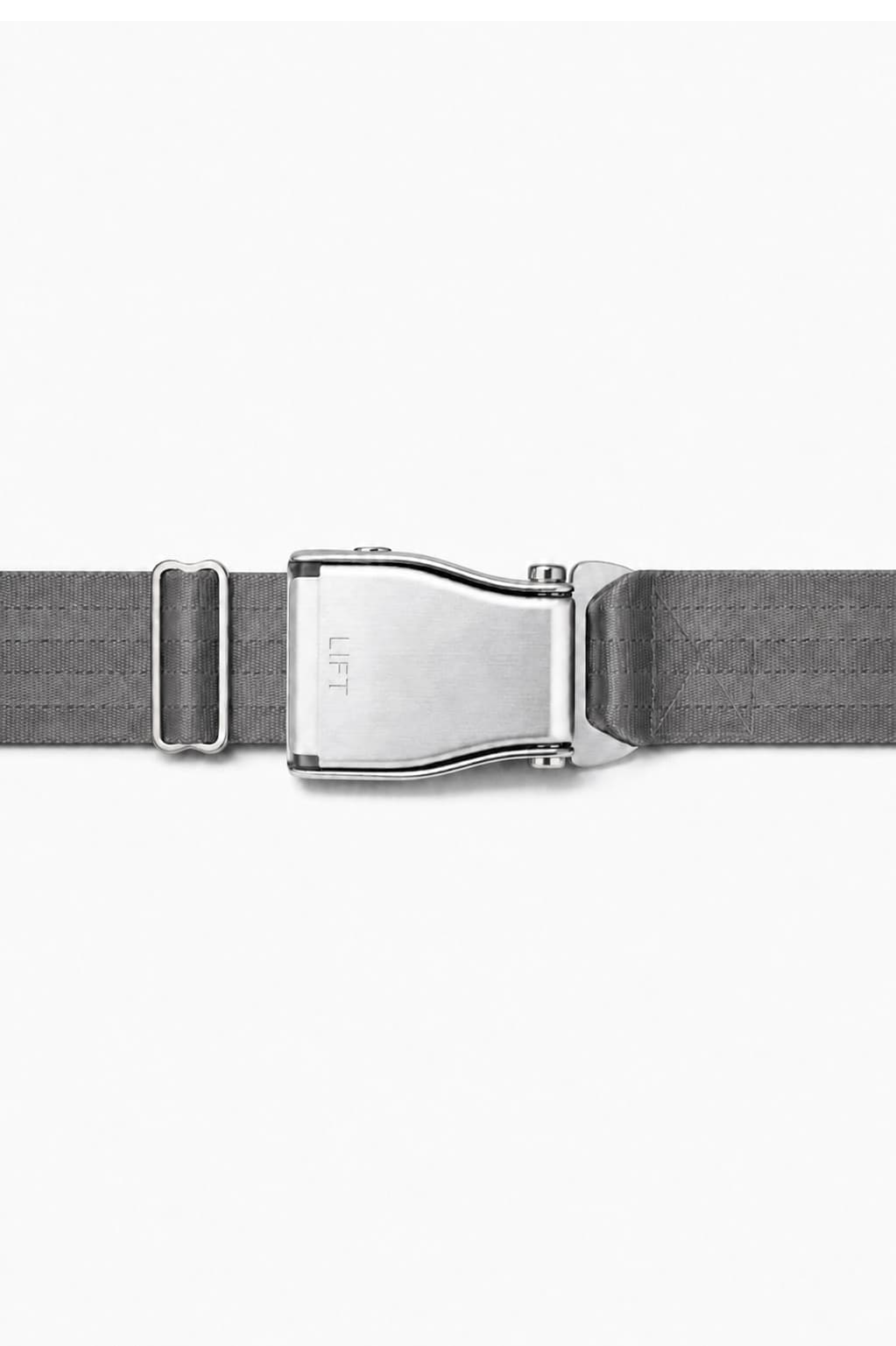
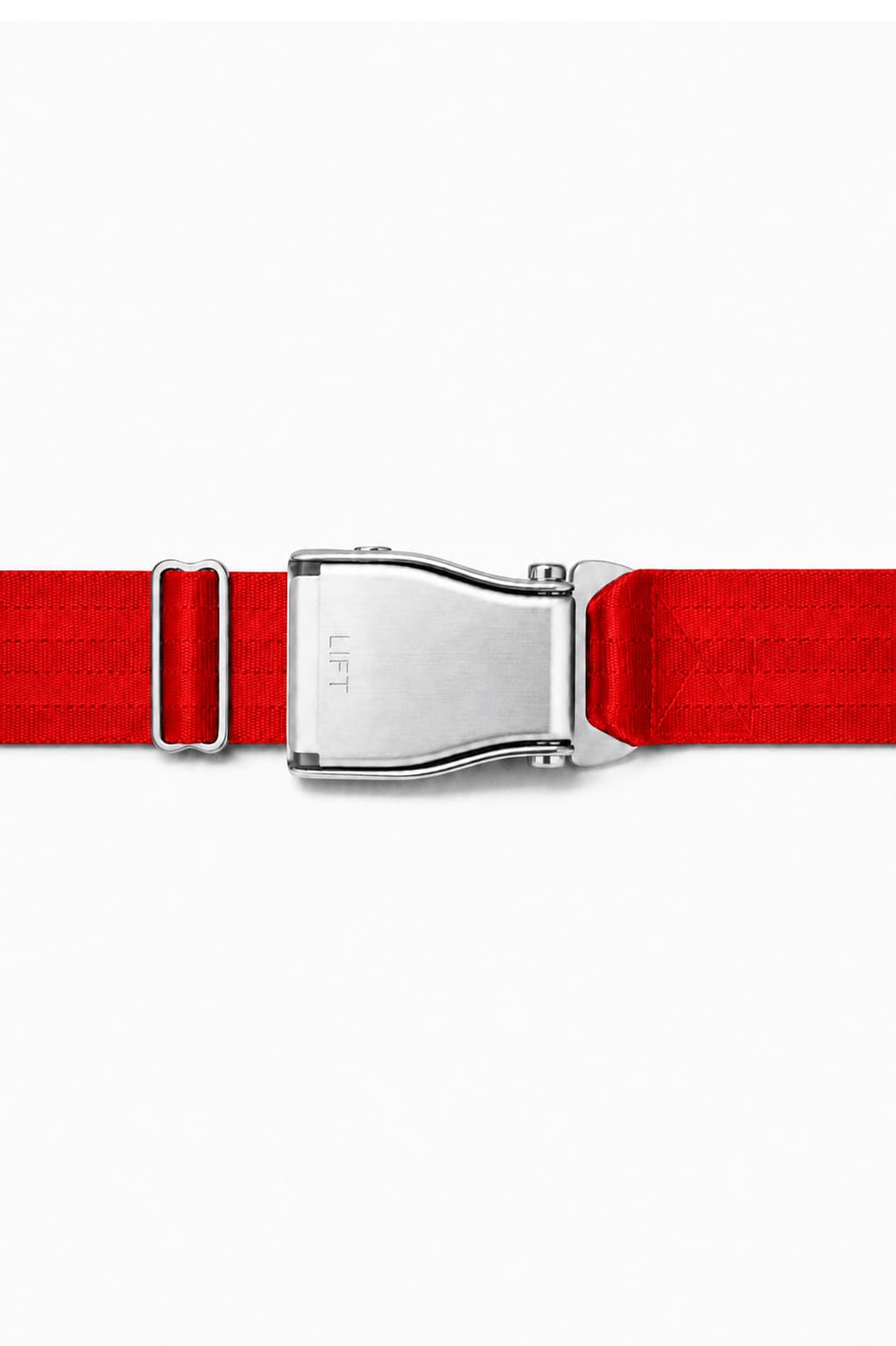
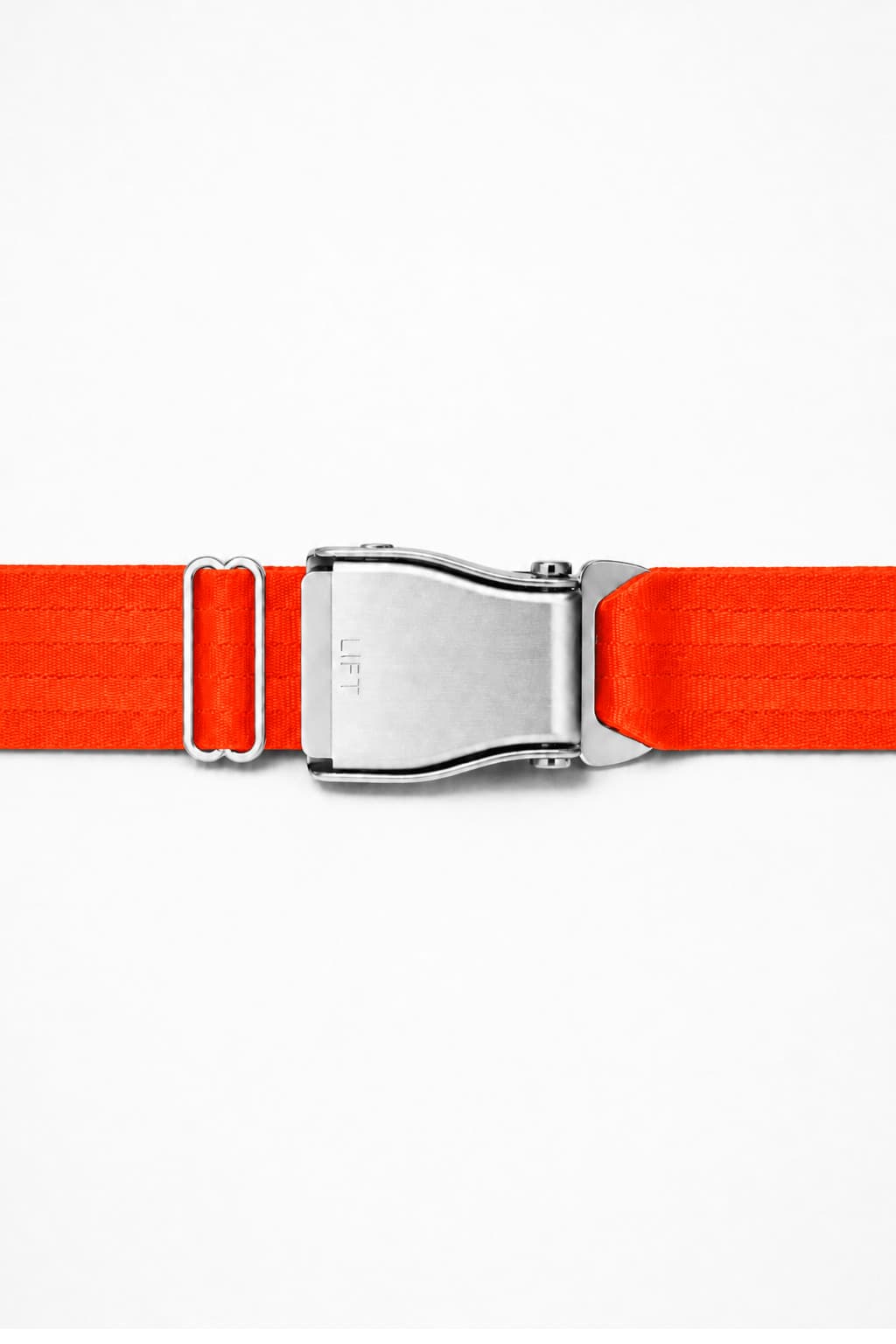
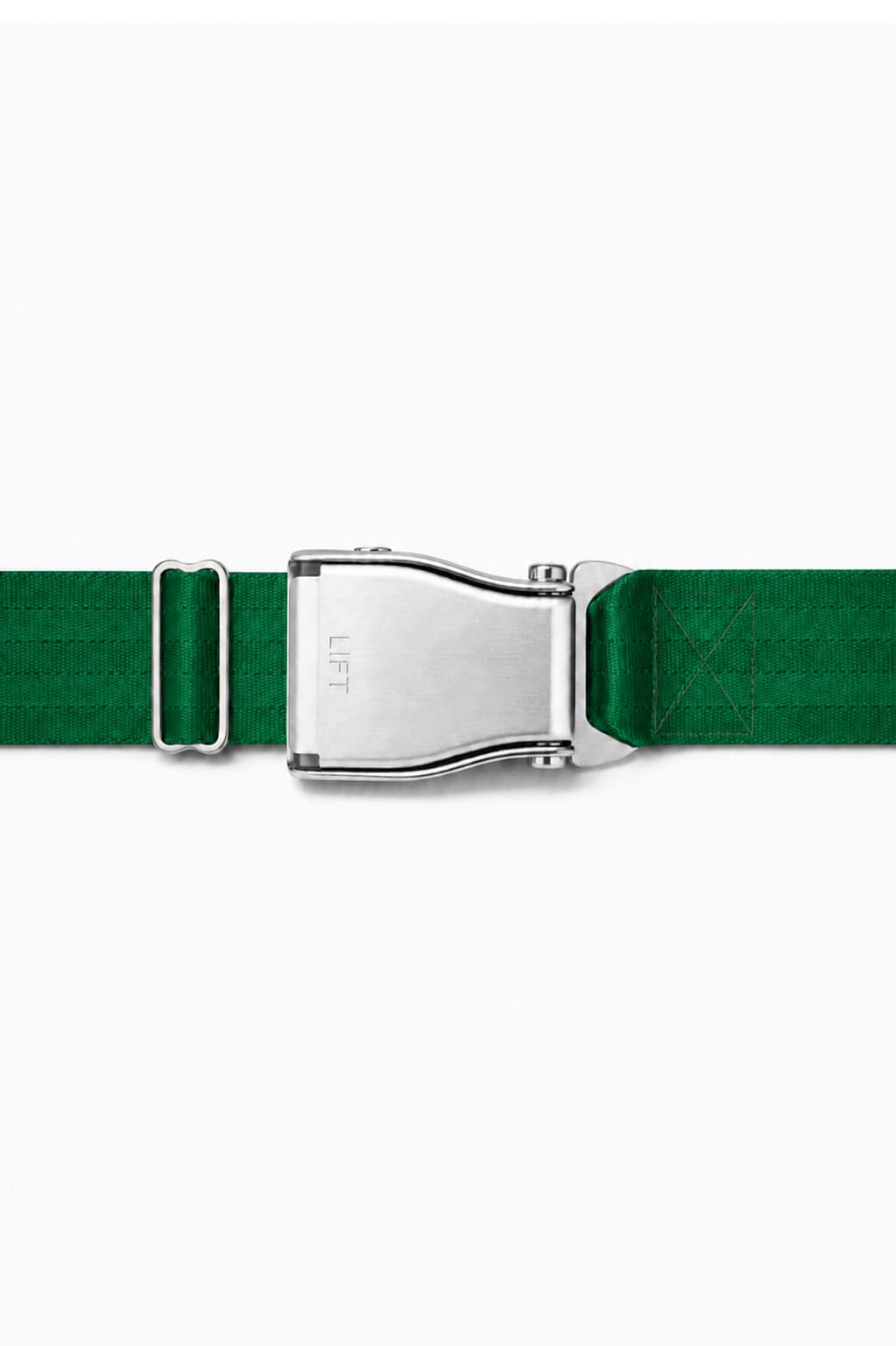
This is what Fly-Belts recognized in Paris in 2012, and what the eight models in the current collection are built around: not the aviation reference, but the object itself. The buckle that the aviation world had already made correct, waiting to be worn somewhere other than a cabin.


Eight routes. Eight belts. One buckle.
The same buckle mechanism as on board, machined in aluminium, in eight colours named after the routes that made aviation.

What Is an Airplane Seatbelt Buckle Belt?
The definitive guide to aviation-inspired belts — what they are, how they work, and why frequent flyers wear them.

The Story Behind Fly-Belts: From the Plane to Your Waist
From a Paris apartment in 2012 to waists around the world — the origin story of a belt that decided the aviation buckle deserved to be seen.