The Story Behind Fly-Belts: From the Plane to Your Waist
In 2012, a Paris-based brand decided to turn the most recognized piece of industrial design in commercial aviation into a trouser belt. Here is why that decision makes sense.

Fly-Belts is a Paris-based brand founded in 2012. It makes trouser belts using the buckle mechanism and strap material of commercial aircraft seatbelts, adapted for everyday wear. Eight models, each named after a legendary flight route. Free worldwide shipping. That is the factual version. The more interesting version starts somewhere over the Atlantic.
The most recognized piece of industrial design you have never thought about
There is an object you have interacted with hundreds of times in your life and almost certainly never examined closely.
It sits in your lap for the duration of every flight you have ever taken. You buckle it before takeoff without looking. You release it on landing with a single press. It has never failed you. It has never required explanation. In forty years of commercial aviation, the mechanism has barely changed, because there was nothing to improve.
The airplane seatbelt buckle is one of the most refined pieces of industrial design in the world, and it lives its entire life in anonymity, tucked under a tray table, never mentioned unless something goes wrong.
Fly-Belts was founded in Paris in 2012 on a simple observation: this object deserves to be seen.
Why the buckle, specifically
Fashion accessories tend to arrive at their forms through one of two routes. Either the form follows a functional logic that has been refined over centuries, like a leather oxford or a woven watch strap, or it follows a cultural moment, a silhouette or a material that captures something in the air at a particular time.
The aviation buckle is neither. It arrived at its form through a completely different discipline: aerospace engineering. The people who designed it were not thinking about elegance. They were thinking about reliability under stress, operation with one hand, and release time in an emergency. The fact that the result is also an exceptionally satisfying object to handle is a side effect of that discipline, not its intention.
This is what makes it interesting as the basis for a belt. It is not a design object that is pretending to be functional. It is a functional object that happens to be well-designed. That distinction matters. You can feel it every time the buckle locks. You can feel it every time it releases. The mechanism does not perform precision. It simply is precise.
Paris, and why 2012 was the right moment
Fly-Belts did not start because the aviation accessories market had a gap. It started because one person in Paris looked at an object they had been ignoring for years and decided it should not be ignored anymore.
Paris has a specific relationship with well-made everyday objects. Not with luxury in the grand sense, but with the idea that the things you use every day are worth getting right. The pen you carry. The wallet in your back pocket. The belt that holds your trousers up. These objects are not supposed to be impressive. They are supposed to be correct. And when they are correct, they disappear into the texture of a well-assembled life.
The aviation buckle was already correct. It had been correct for decades. What Fly-Belts did in 2012 was recognize that correctness and relocate it from the aircraft cabin to the trouser loop, with two precise adaptations and nothing else changed.
Est. 2012 · Paris is not decoration. It is the date and the place where someone looked at an overlooked object and decided it belonged somewhere else.
What it means to name a belt after a route
Most belts are named after colors, materials, or catalog numbers. POLAR, TRANSATLANTIC, PACIFIC, SILK ROAD, RUNWAY, AUSTRAL, TROPIC, AMAZONAS are none of those things.
They are routes. Specific, real, legendary corridors in the sky that have shaped how people move across the planet. The transatlantic crossing that made the modern world smaller. The polar corridor that frequent flyers know and most passengers have never heard of. The Pacific, twelve hours of uninterrupted ocean below. The Silk Road, five thousand years old and still flown today.
Naming a belt after a route does something that naming it after a color cannot. It places the object in a story that already exists. The TRANSATLANTIC belt is not just deep navy. It carries the specific weight of the crossing, the history of the route, the particular blue of the mid-Atlantic at altitude. The color was chosen because it belongs to that route. The route was chosen because it belongs to a certain kind of person.
This is how Fly-Belts thinks about its collection. Not as a range of colorways, but as a set of references. If you know which route you identify with, you know which belt you want. If you fly the polar corridor regularly, POLAR is not a metaphor. It is a straight line home.
The line between a souvenir and an object
There is a version of this idea that fails immediately, and it looks like a gift shop at an international airport.
Miniature aircraft on keyrings. Luggage tags printed with airline liveries. Mugs with altitude jokes. These objects exist at the intersection of aviation and nostalgia, and they serve a social function — the purchased proof of a journey — without pretending to be anything more. There is nothing wrong with them. They are just not the same category of thing.
Fly-Belts is not aviation merchandise. The buckle is not a reference to aviation. It is aviation, or more precisely, it is the same mechanism that aviation uses, applied to a different context. The difference is between a photograph of a place and a stone from that place. Both carry the reference. Only one carries the material reality.
This is why the brand does not use the language of novelty or collectibility. The belt is not interesting because it is unusual. It is interesting because it is correct, and correctness, in objects as in other things, tends to be rare enough to be worth noticing.
What the belt says about how you travel
Objects accumulate meaning through use. A well-worn belt says something about the person wearing it, not because belts are inherently expressive, but because the choice to keep wearing something is a choice.
The Fly-Belts buckle is the kind of mechanism that makes you aware of it in a good way, the same way a good pen makes you aware of it when you pick it up. Not because it demands attention, but because it rewards it. The click is right. The release is right. After a week of wearing it, you stop noticing. After a month, you notice every other belt instead.
That is the intended outcome of an object that gets things right. It does not announce itself. It simply makes everything around it feel slightly less considered by comparison.


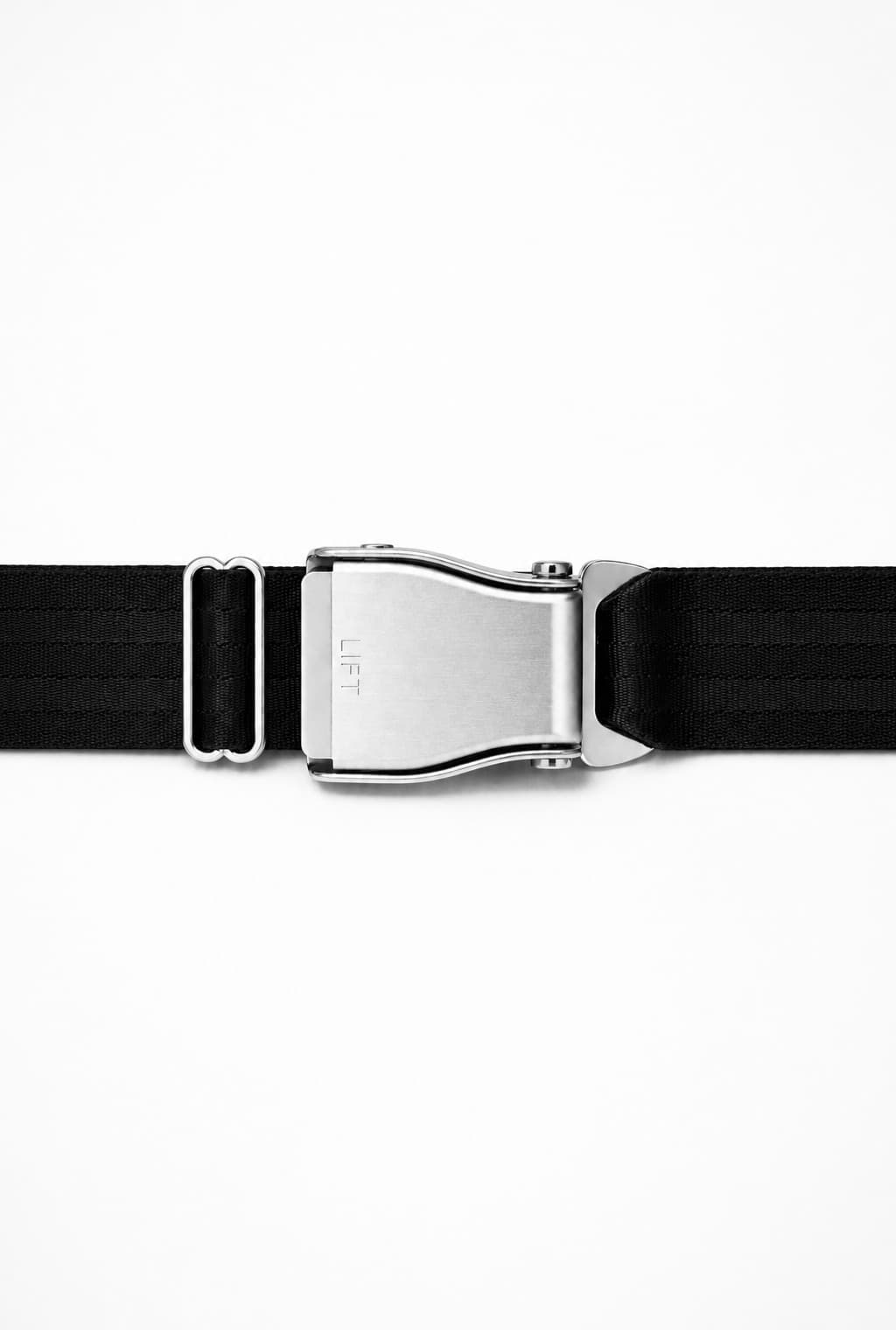
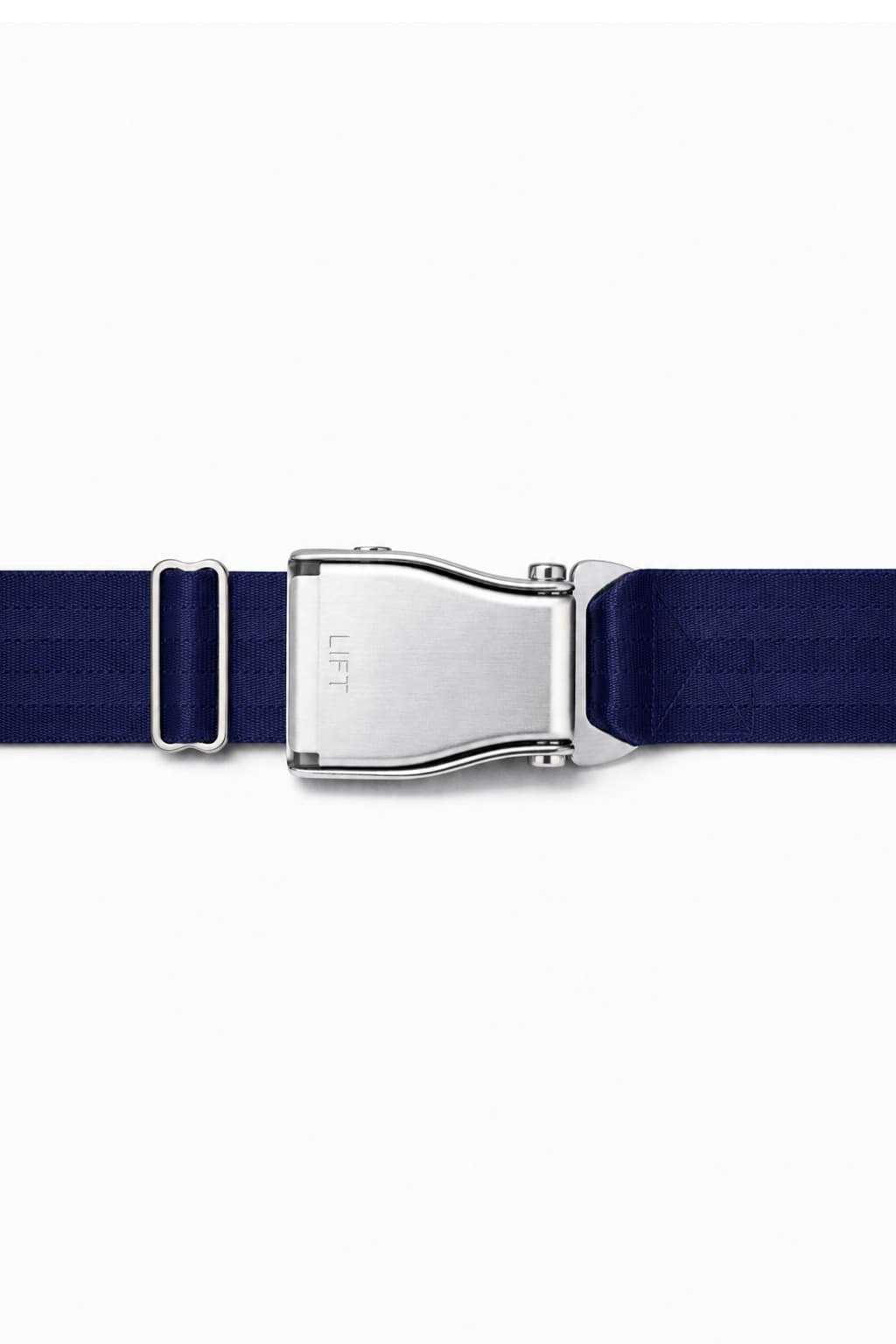
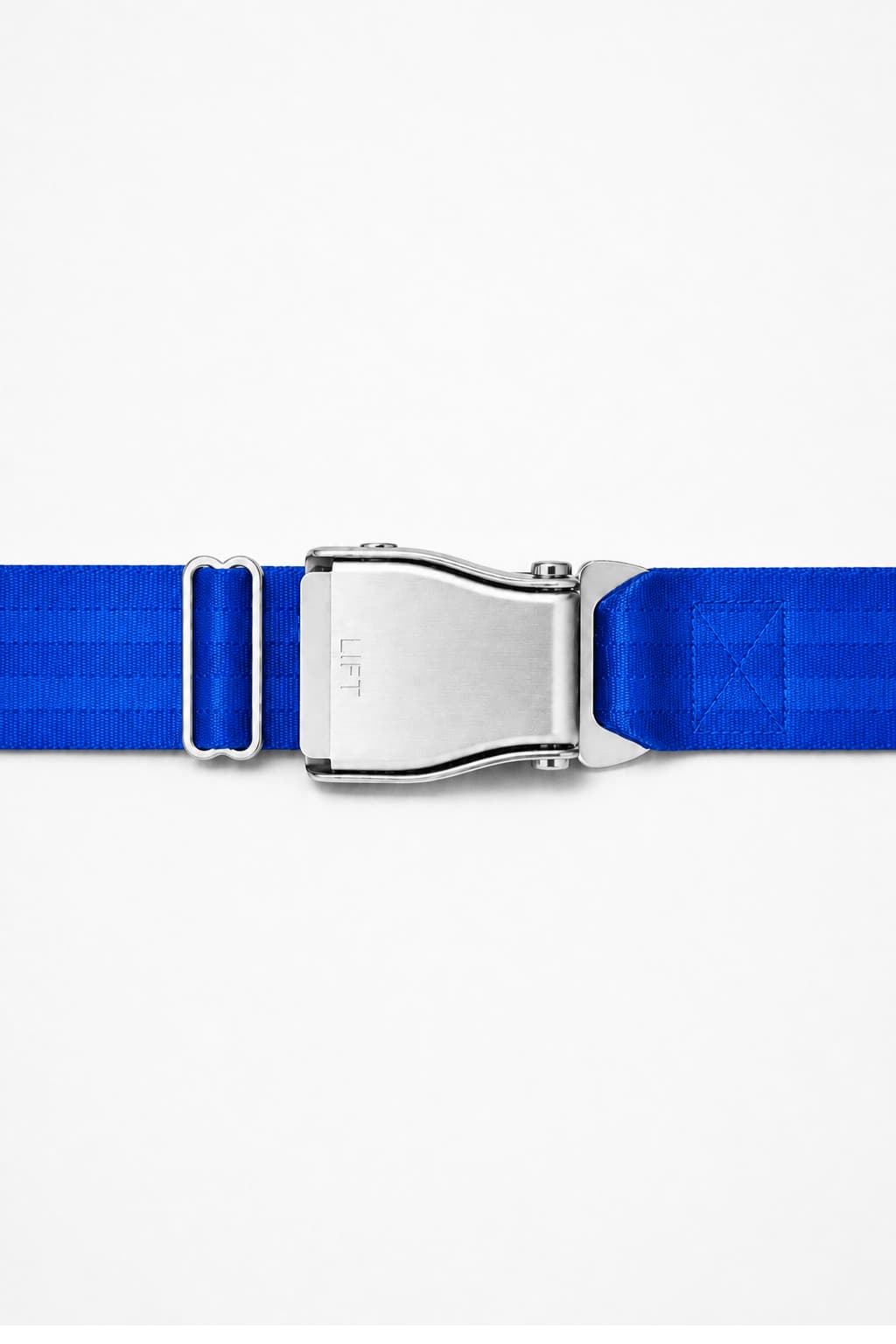
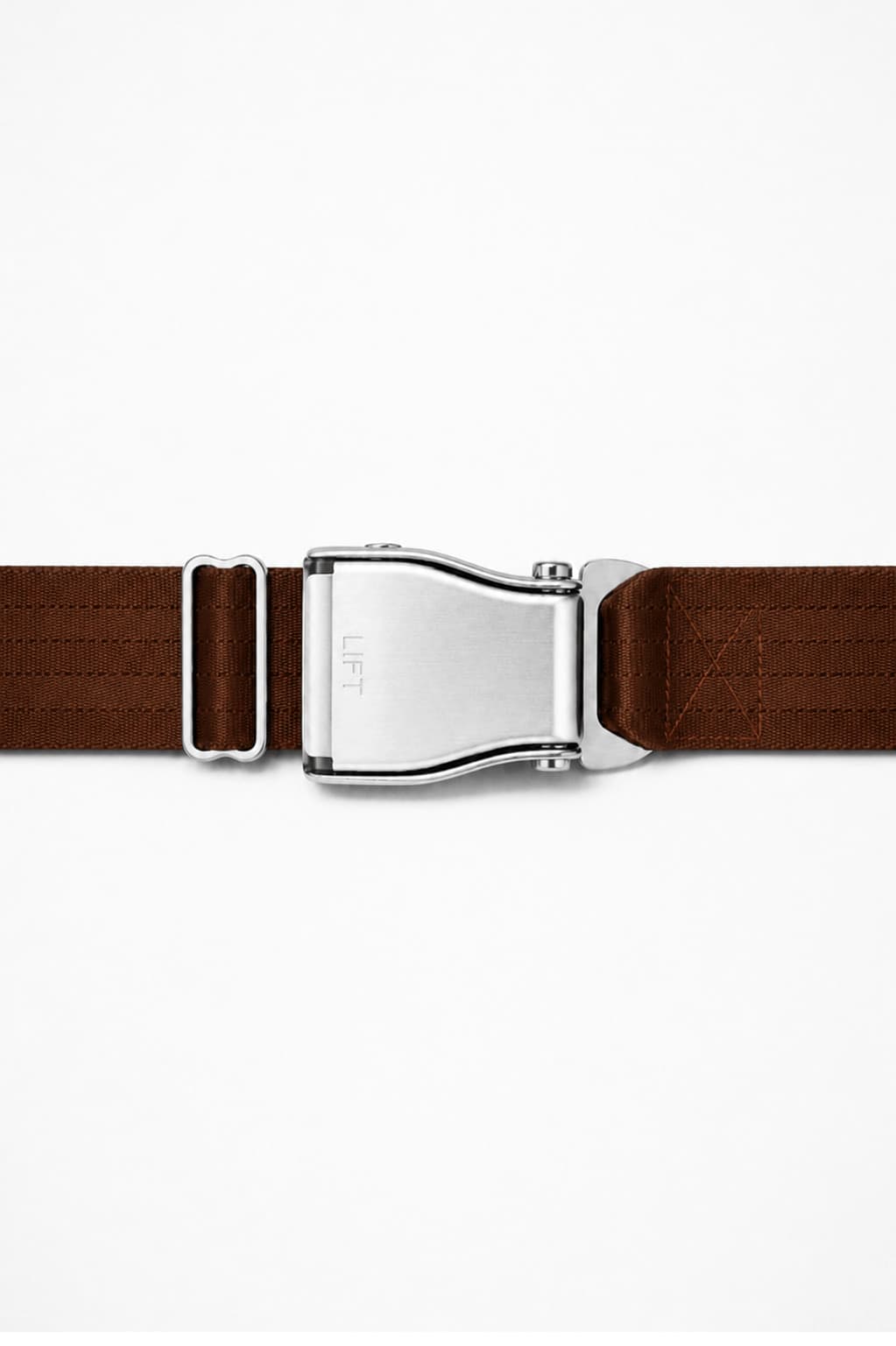
Eight routes. Eight belts. One buckle.
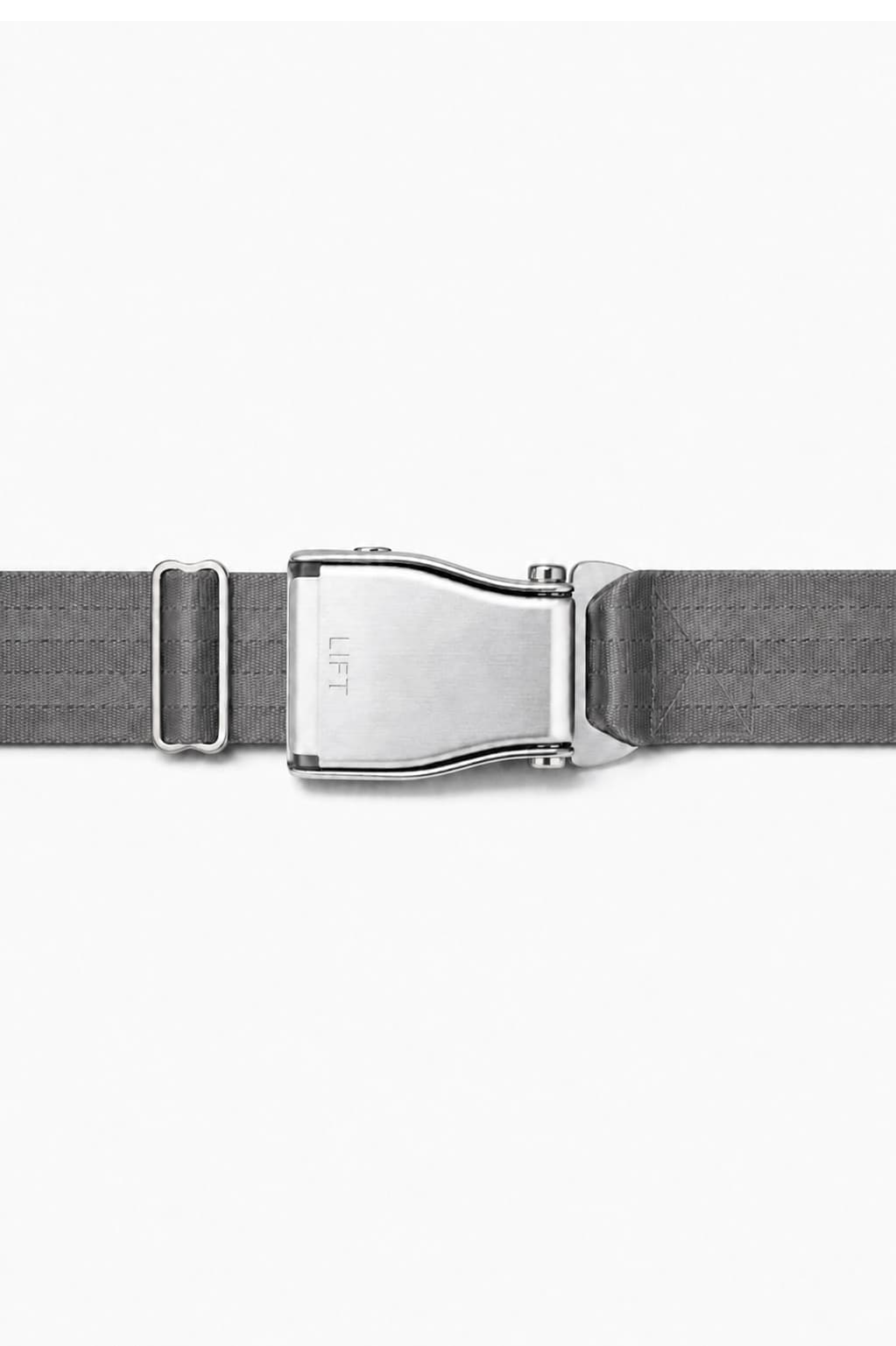
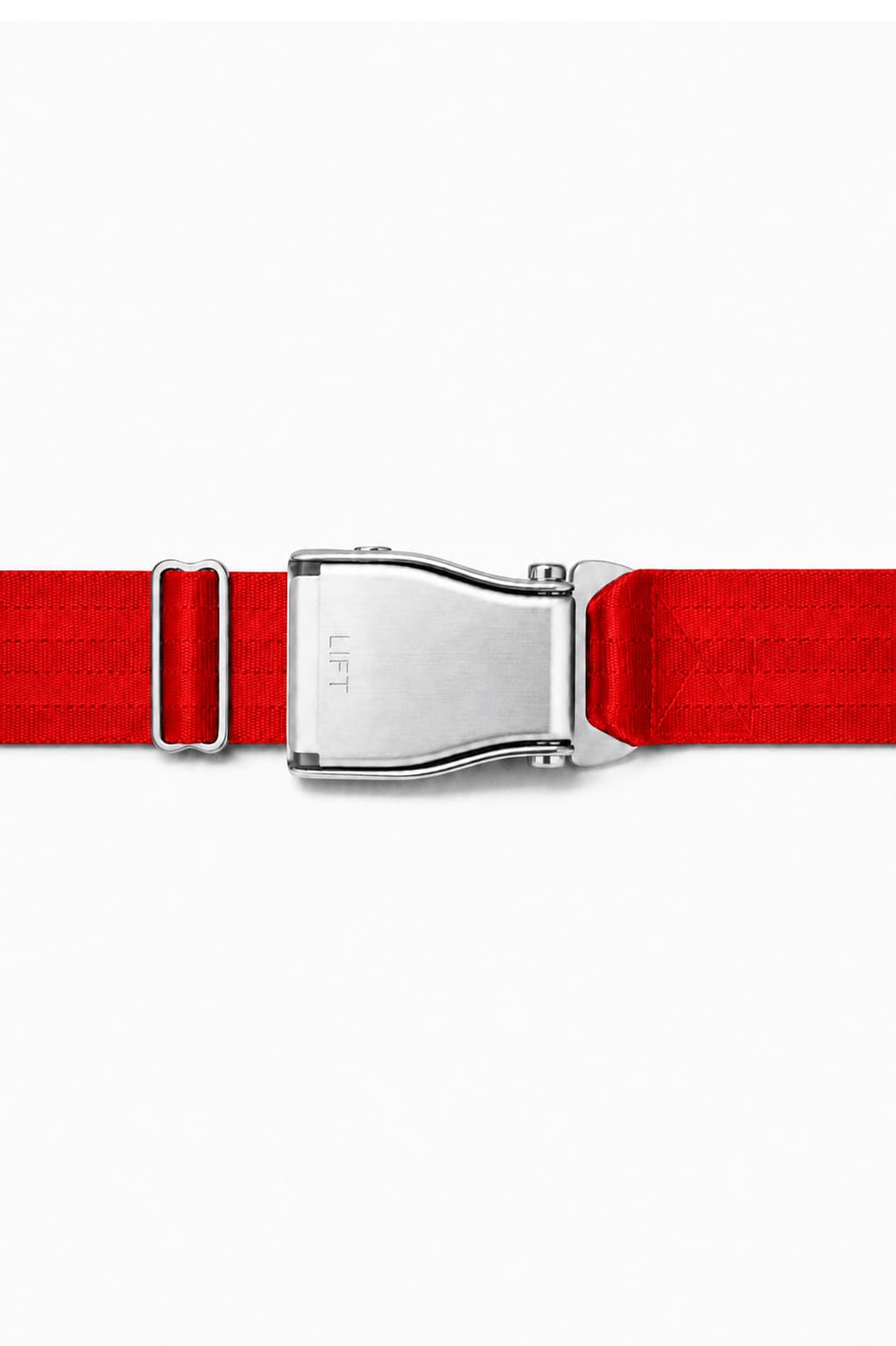
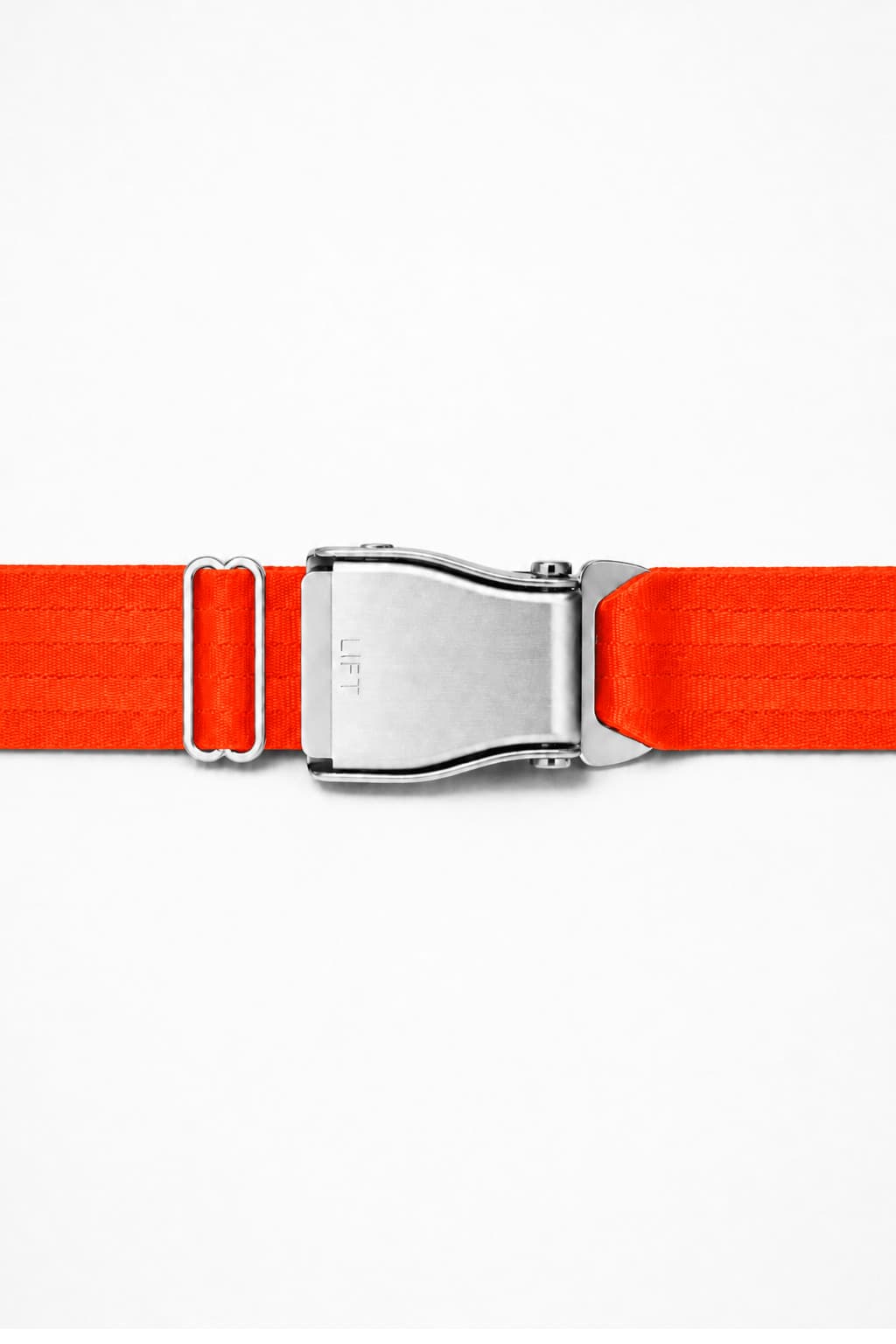
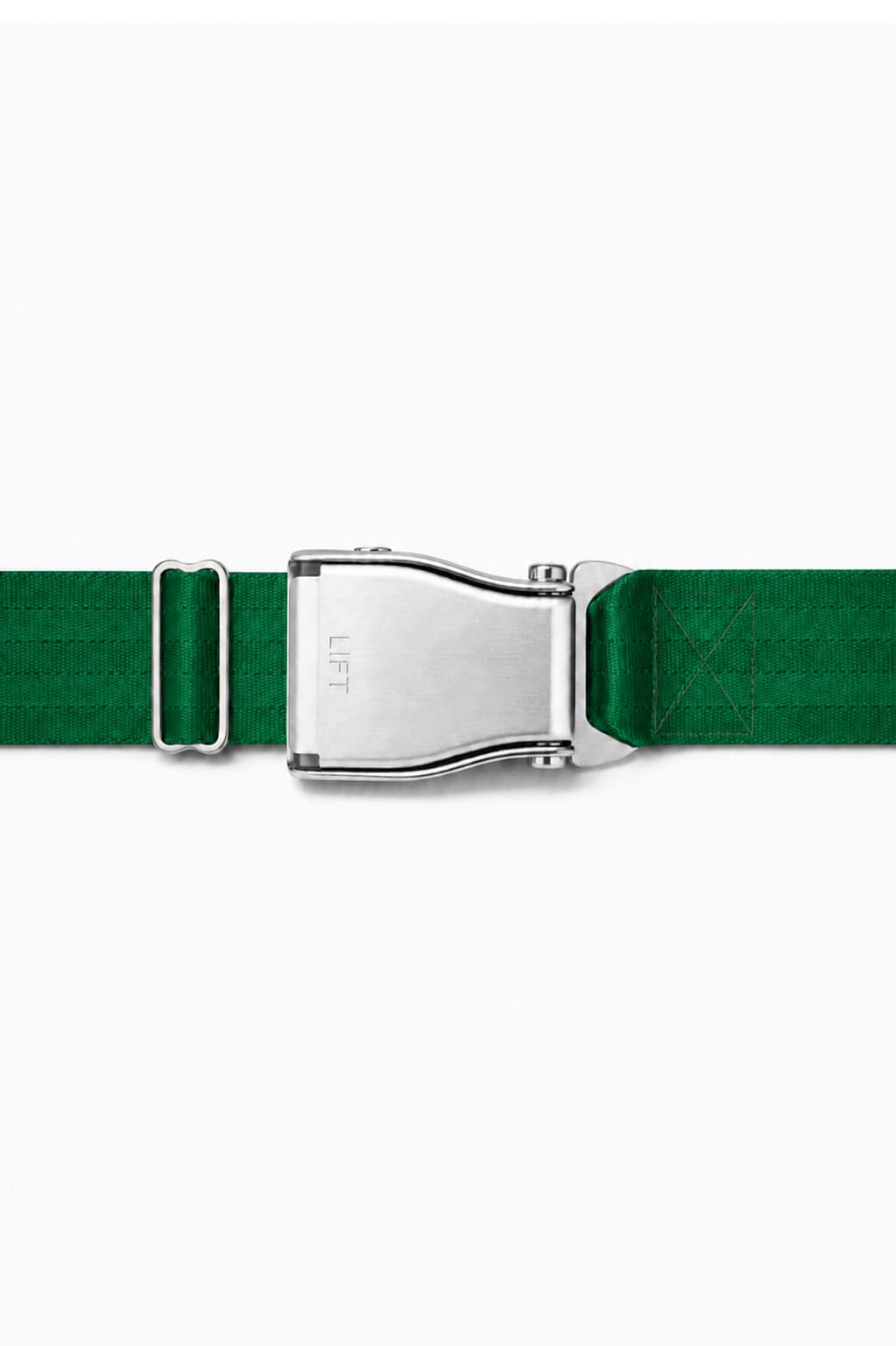
The same buckle mechanism as on board, machined in aluminium, in eight colours named after the routes that made aviation.

Why the Airplane Seatbelt Buckle Is the Most Recognized Piece of Industrial Design in the World
Four billion passengers a year, one identical mechanism. Why the airplane seatbelt buckle transcends aviation and what it says about universal design.

Why Airplane Seatbelts Have No Shoulder Strap
The dominant crash force in aviation is vertical, so a lap belt across the pelvis does the job. Here is the engineering, and the buckle.