Fashion Never Left the Tarmac: Eighty Years of Airline Uniforms
Eighty years of airline uniforms signed by fashion houses, from Pucci at Braniff to Puma at Bangkok Airways, and what wearing aviation means.
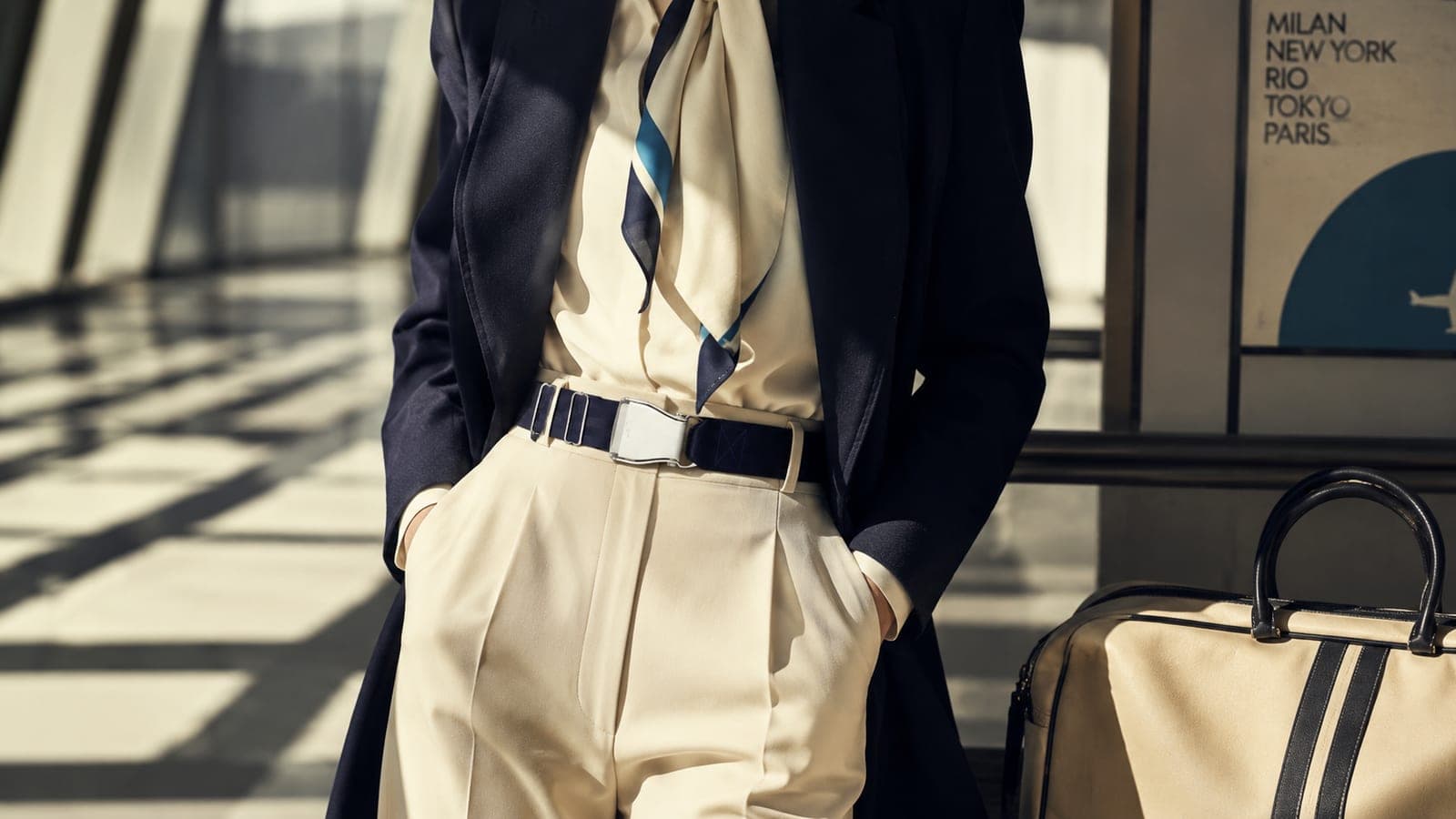
Airlines have commissioned couturiers for their crew wardrobes since 1946, and they still do. Ozwald Boateng cut the British Airways uniform in 2023, Manish Malhotra the Air India one the same year, Ashi Studio the Riyadh Air one in 2024, and Puma joined Bangkok Airways in 2025. The practice is eighty years old. Its loudest decade ran from 1965 to 1977.
What makes this worth telling as one continuous story, rather than as a golden age followed by decline, is method. Whether Pucci is repainting a fleet in 1965 or a Saudi couturier is staging a uniform on a Paris runway in 2024, the exercise does not change: clothes that have to be worn all day, at altitude, and still say where they come from.
Braniff, 1965: the plain plane ends
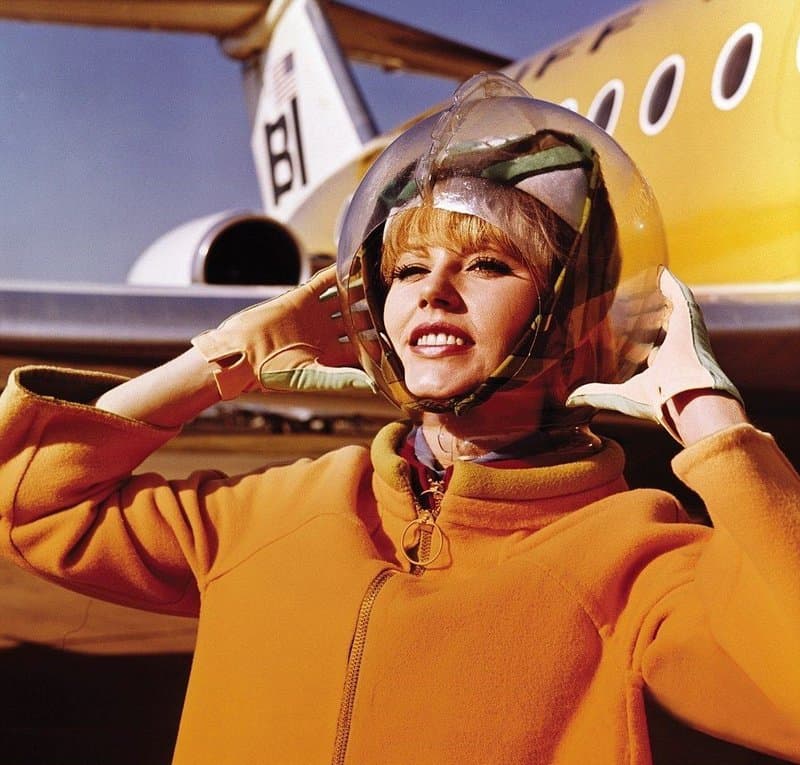
Braniff International was a mid-sized American carrier with no particular claim on glamour when it turned to the agency Jack Tinker & Partners and, with it, to the account executive Mary Wells. Her answer was a campaign called The End of the Plain Plane, and it was meant literally. Braniff repainted its fleet in solid colours, orange, yellow, blue, green, turquoise, lilac and burgundy, at a moment when nearly every other airline flew white.
The interiors went to the designer Alexander Girard, who reworked more than 17,000 elements, from the aircraft livery down to the blankets and the sugar sachets. The uniforms went to Emilio Pucci.
There was an economic reason for that extravagance. Until the Airline Deregulation Act of 1978, American fares, routes and market entry were set under the Civil Aeronautics Board, which left carriers with almost no room to compete on price. What was left to compete on was everything else: schedule frequency, meals, cabin comfort, and the way a crew looked walking across the apron. Design was not a marketing supplement in that system, it was the product.
Pucci's first Braniff collection appeared in 1965 under the name Gemini IV, after the space mission flown that same year. He kept the account until 1974, and his approach was closer to a system than to a uniform. The layered sets, known inside the airline as the Air Strip, were built to be taken off one piece at a time, so a crew member stayed correctly dressed for boarding, for service and for a warm destination without ever changing outfit.
Air France, 1969: Balenciaga chooses cut over colour
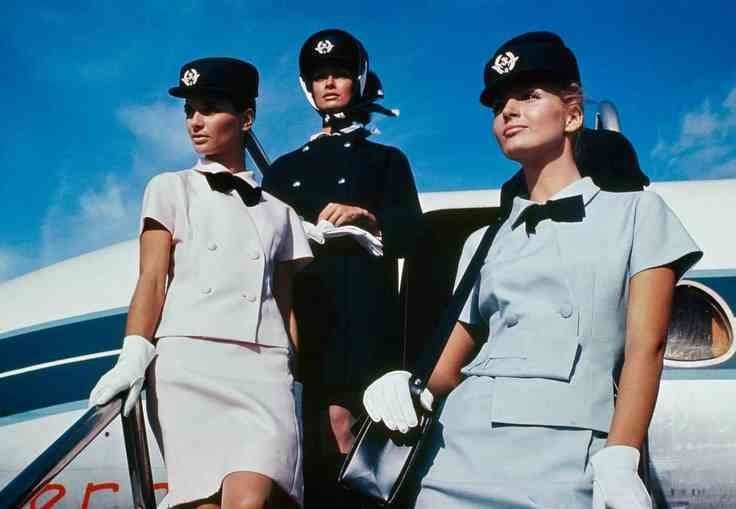
Air France took the opposite road. Rather than colour, it chose construction, and it went to Cristobal Balenciaga, who opened a dedicated Air France department inside his Paris house to handle the commission. The full wardrobe, winter and summer, reached the crews in June 1969. In 1971, two more outfits were added for ground staff.
The result reads as tailoring, not as costume. One navy blue serge set for winter, two lighter ones in white and pale blue for summer, all worn with the same navy satin cap with a short peak, white gloves, and a dark bow closing the neck. The press description of the time insists on one detail above the others.
To show off the white twill blouse, the short jacket of navy blue serge has no collar. An aeronautical look is produced by the pockets in front and on the sleeves.
Air France press description · Balenciaga uniform, 1969
The commissions never stopped, they changed shape
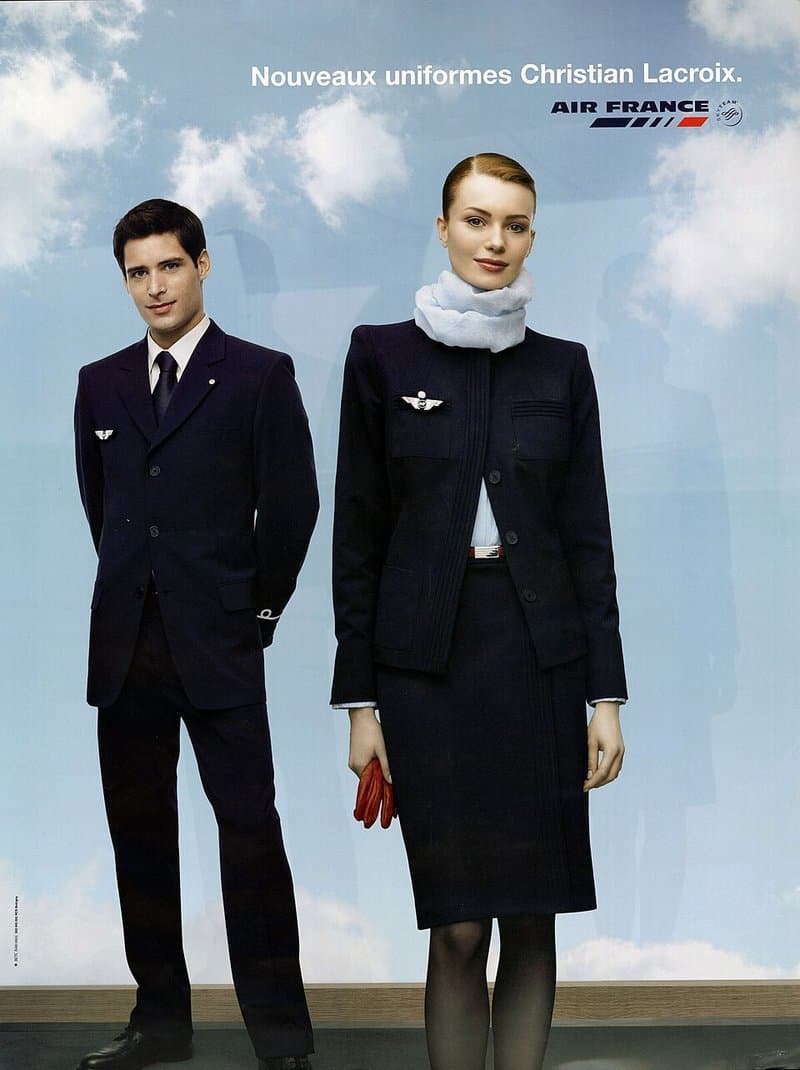
Most accounts stop in 1977, with Halston at Braniff. The orders never did. Vivienne Westwood dressed 7,500 Virgin Atlantic staff in 2014. Ettore Bilotta signed what turned out to be the last Alitalia uniform in 2016. Zac Posen’s Delta wardrobe arrived in May 2018, more than a million garments produced with Lands’ End. In January 2023 British Airways unveiled its first new uniform since 2004, cut by the Savile Row tailor Ozwald Boateng for more than 30,000 colleagues.
What changed is the map. In December 2023 Air India presented a wardrobe by Manish Malhotra, ombre saris and bandhgalas whose pattern comes from the airline’s new Vista logo, rolled out with the arrival of its first A350. In June 2024 Riyadh Air showed fifteen looks by the Saudi couturier Mohammed Ashi in Paris, on a runway, the evening after his couture show. In August 2025 Bangkok Airways did something no fashion house had attempted: with Puma, it made a sneaker part of the official uniform for pilots, cabin crew and ground staff.
The commission is no longer a European habit carried out by a house near the Avenue Marceau. It has become global, and it now answers to comfort and to walking distances as much as to silhouette.
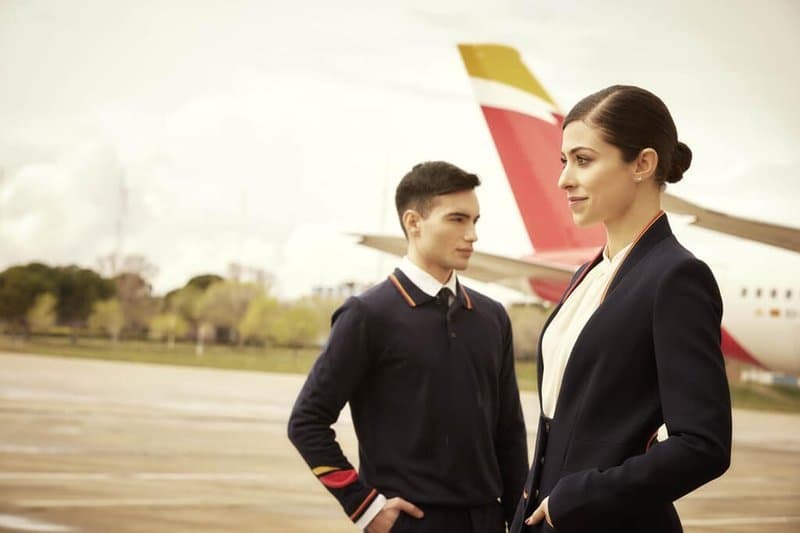
What the 1965 decade still holds is not exclusivity, it is unity. For about ten years an airline's livery, its cabin and its clothes were drawn as a single object, by people who accepted that all three would be worn, creased and photographed on a wet apron.
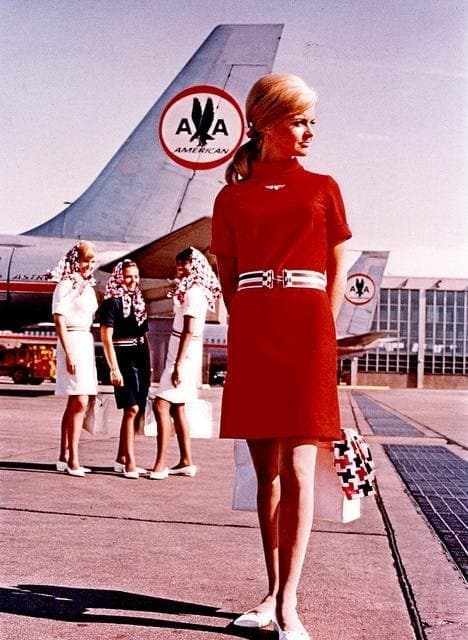
What survives is what was worn
Museums now hold the Pucci sets and the Balenciaga jacket, and the SFO Museum has built entire exhibitions around them. Those pieces still read as aviation rather than as costume for one reason: they were made to be used, by people who worked inside the aircraft.
Pucci, Balenciaga and Ashi each made the same move in their own decade: take the grammar of flight and build something that holds up on the ground, worn by someone who is not on duty.
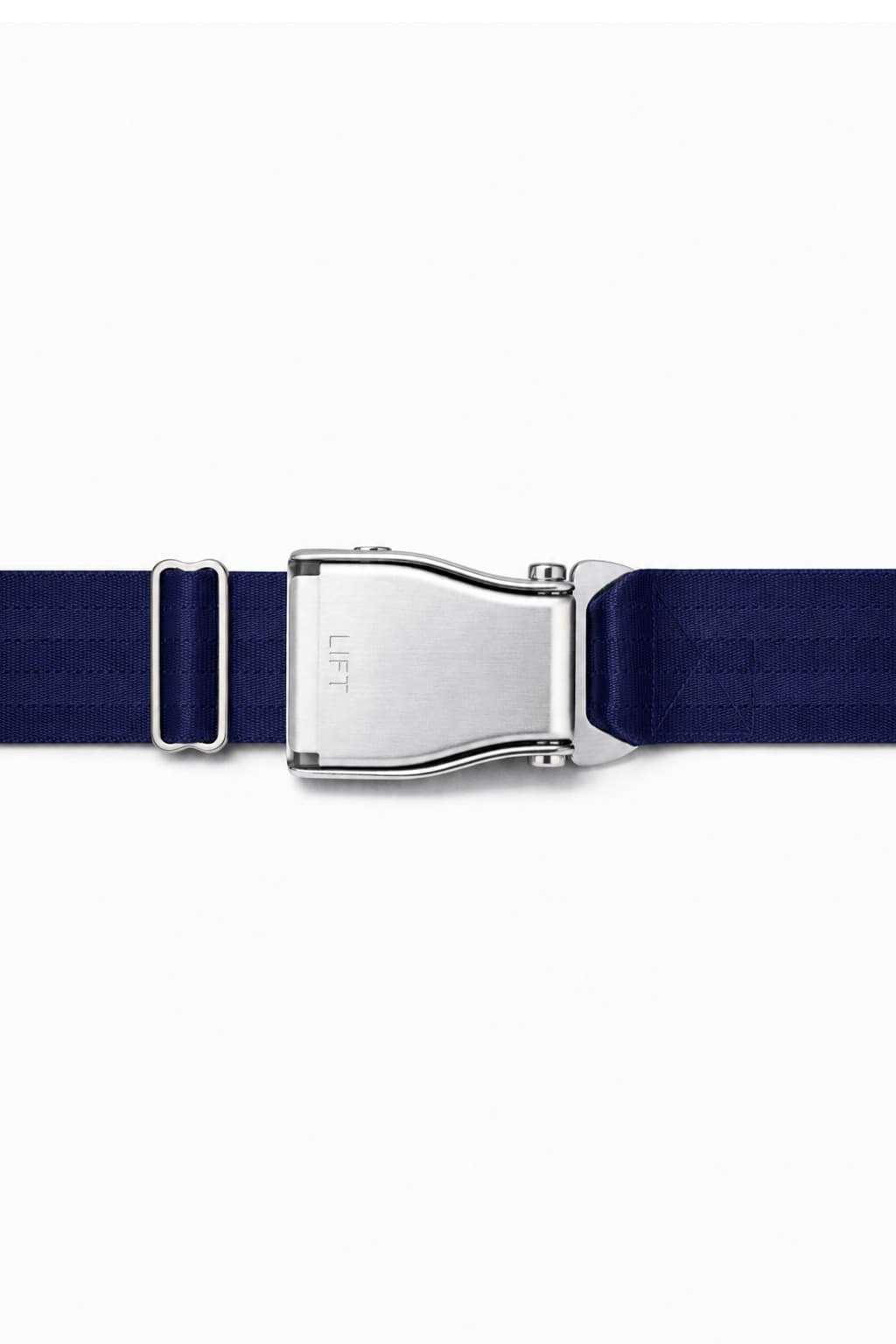
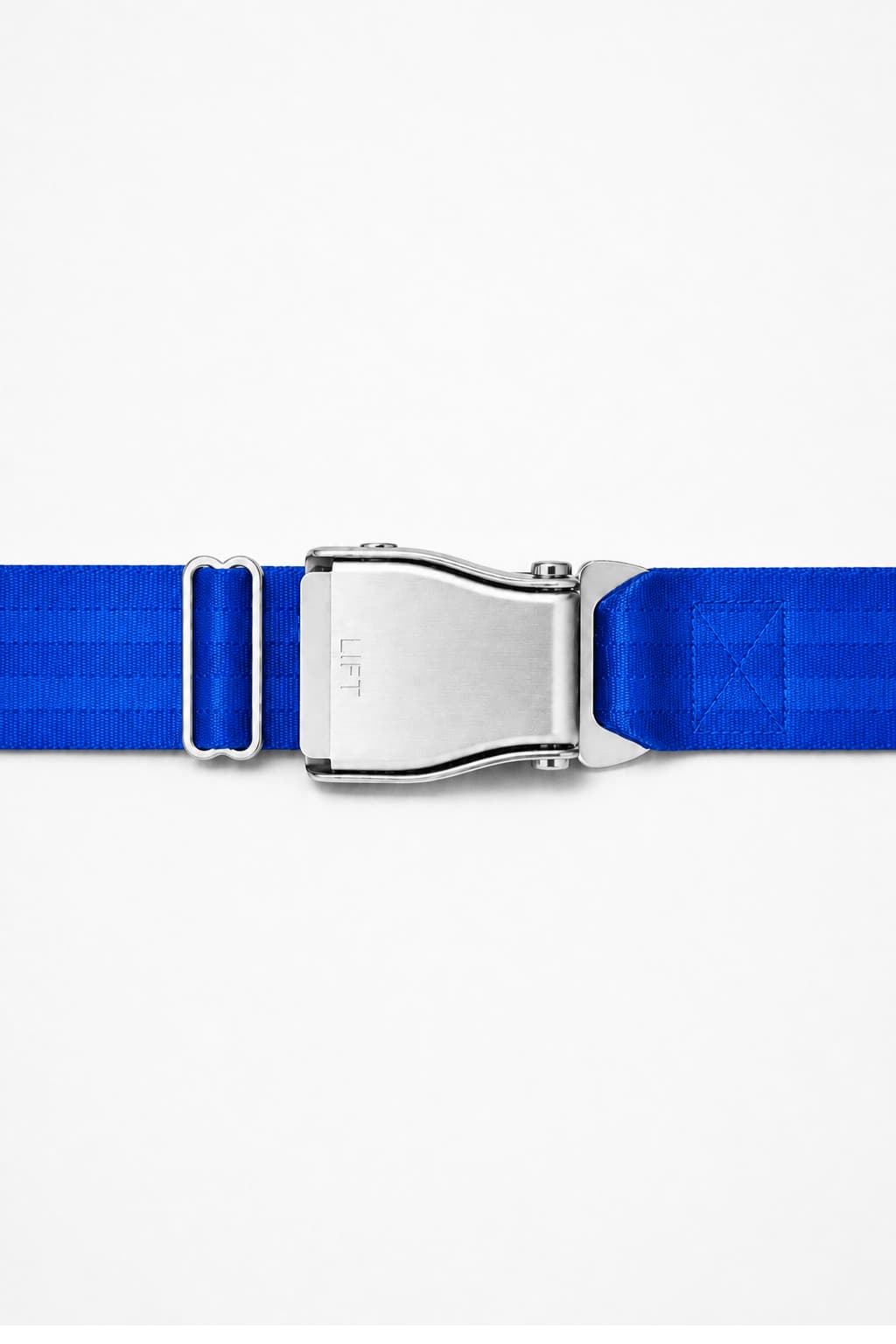
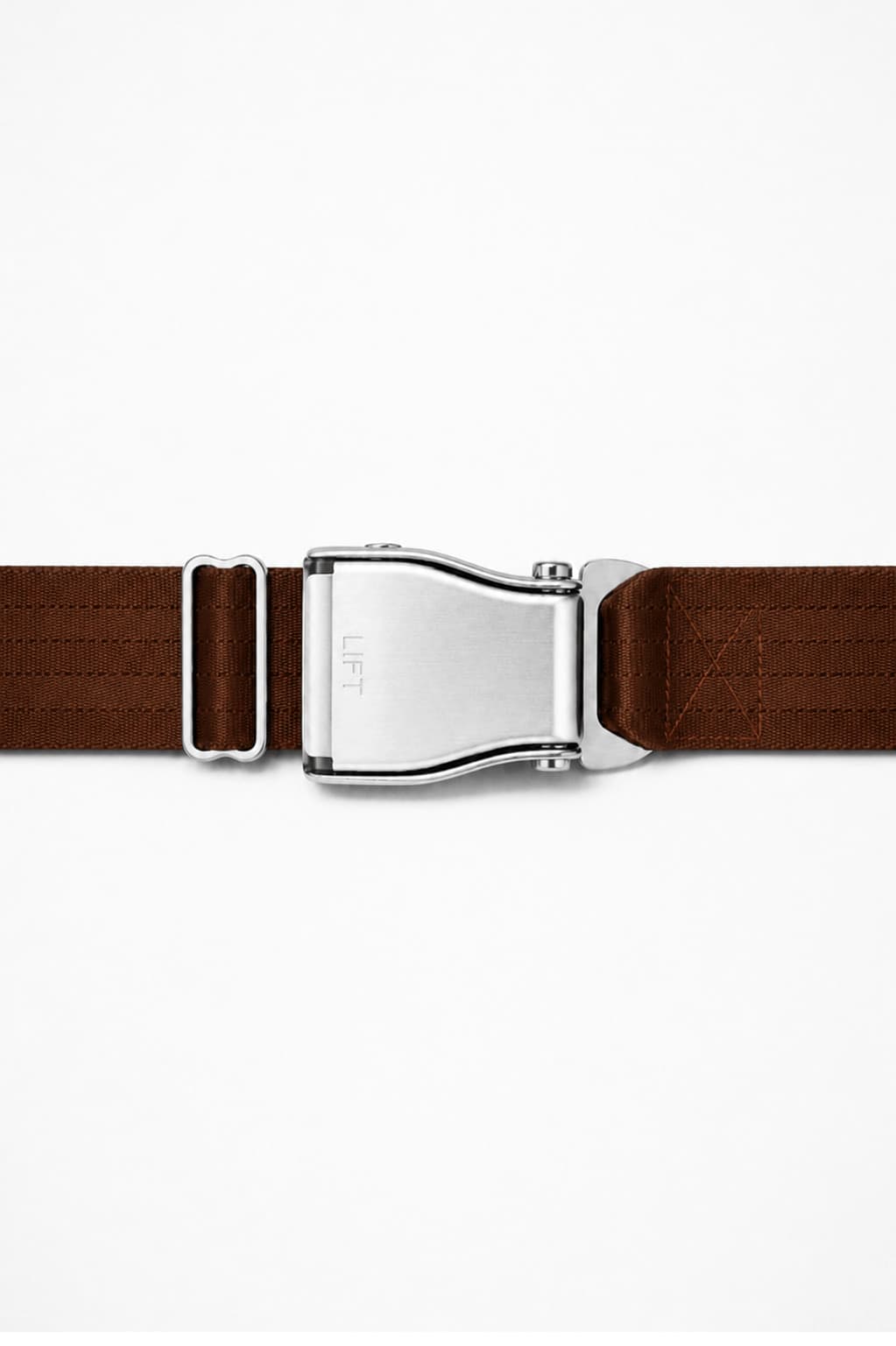
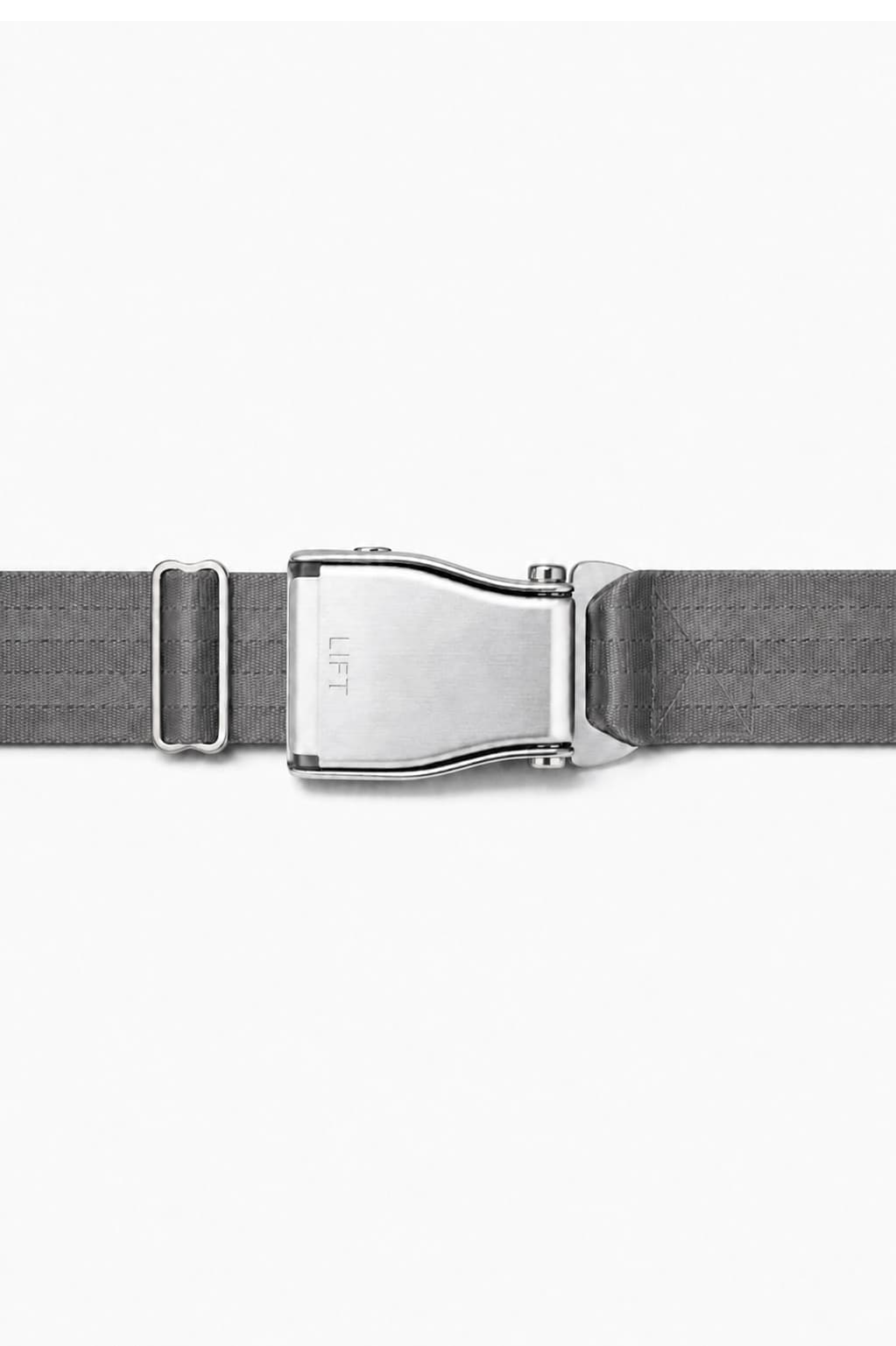
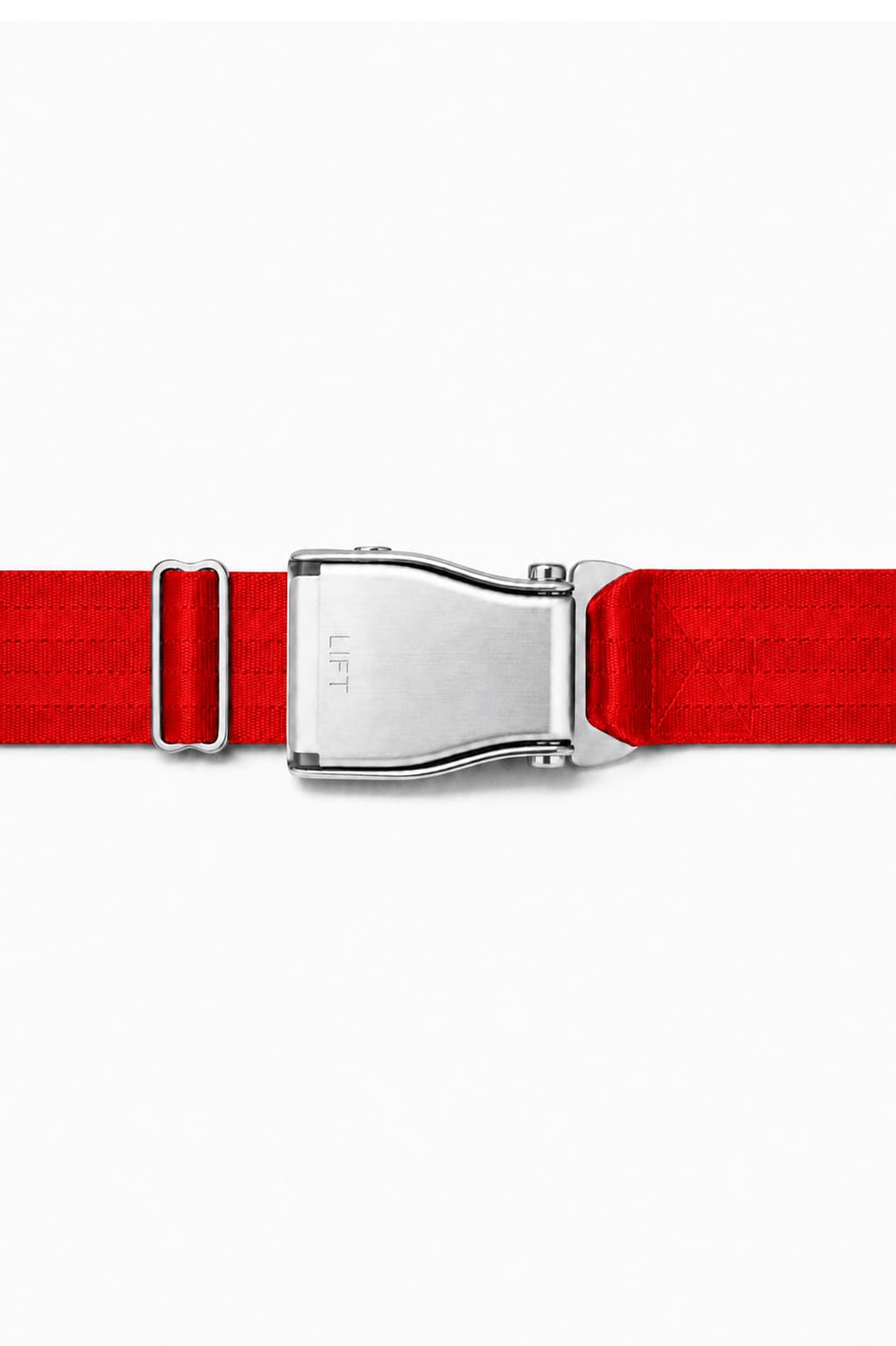
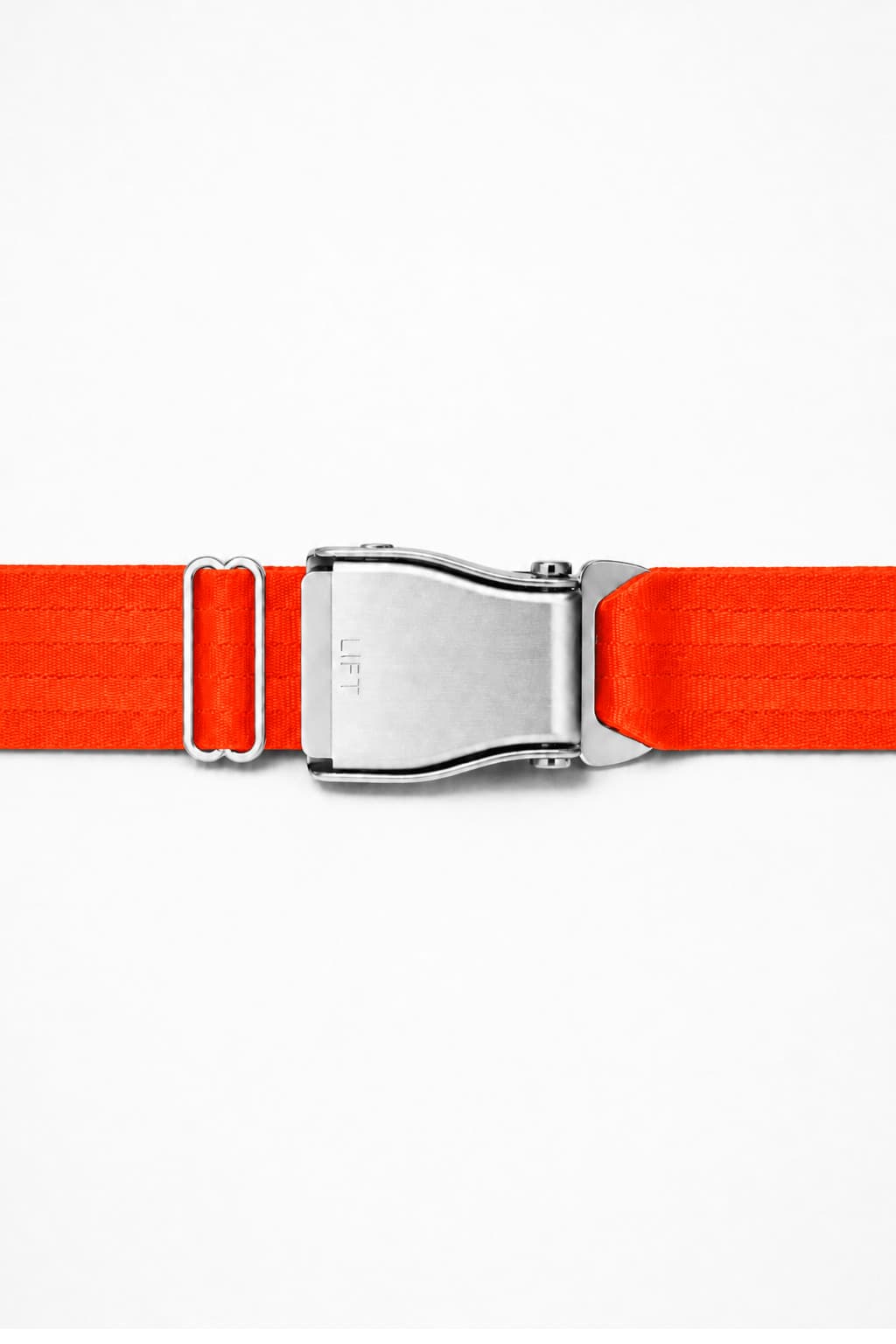
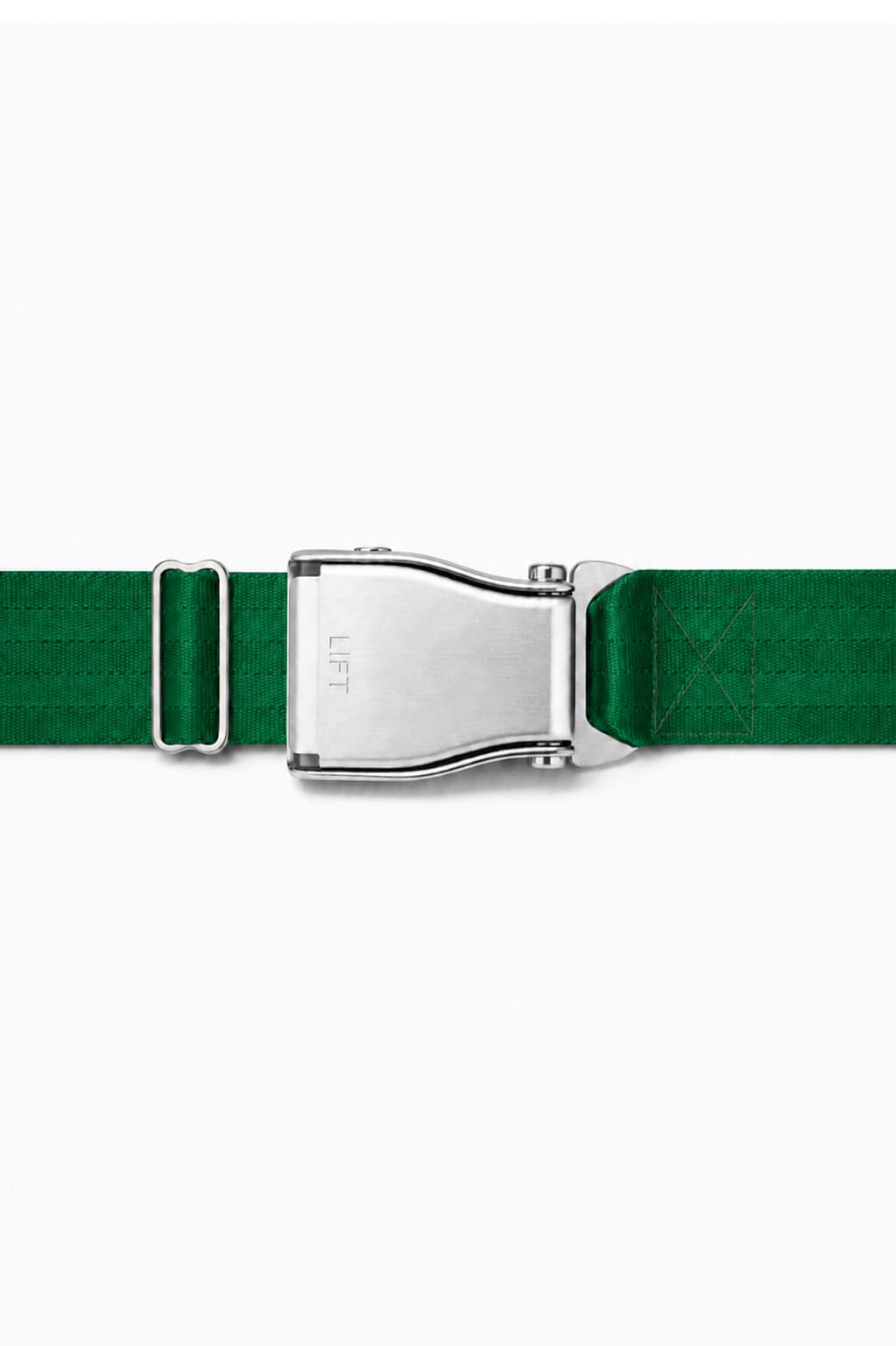
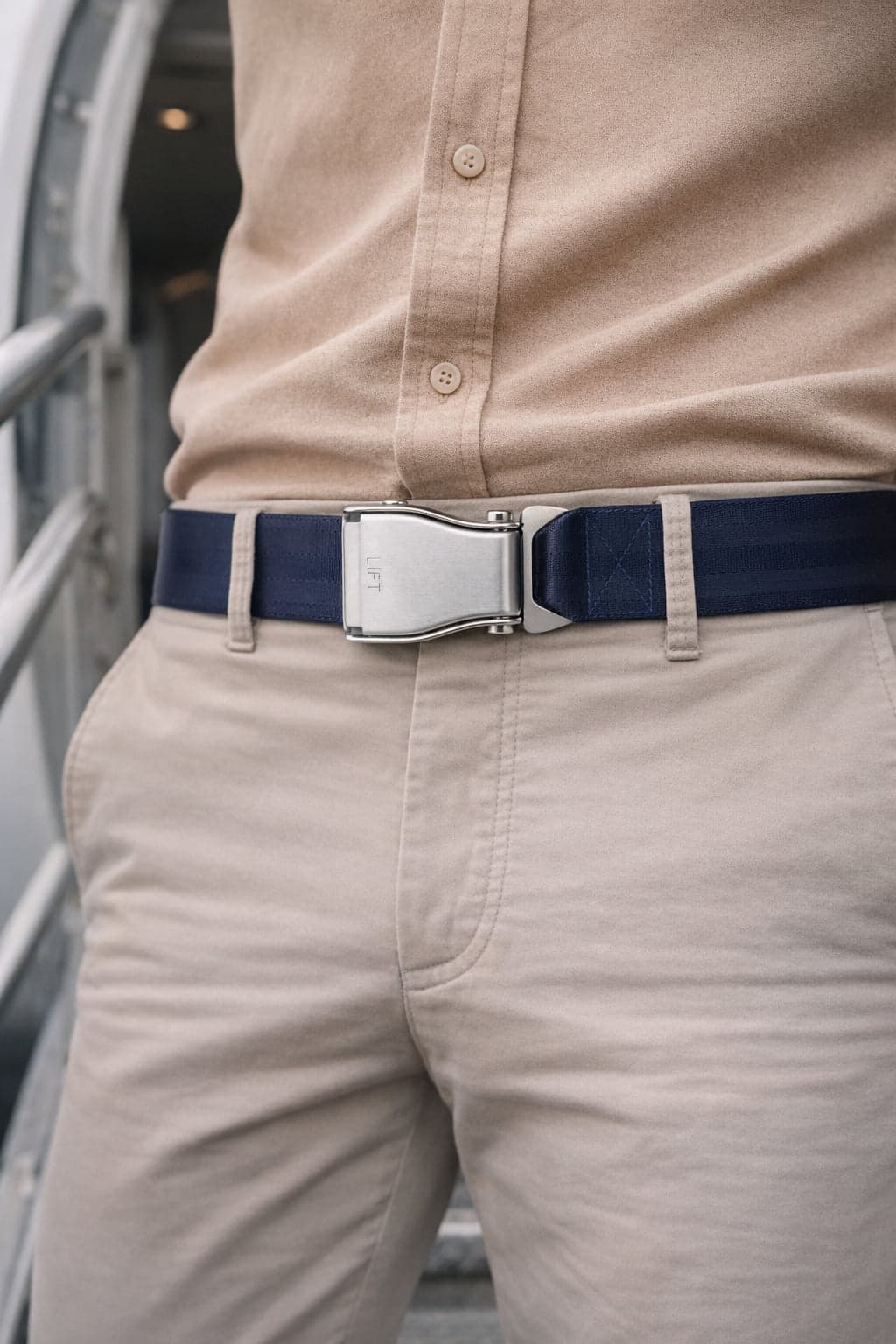
A Fly-Belt belongs to that lineage rather than to the souvenir aisle, and the difference matters. It is not a part unbolted from a cabin, and it never claims to be one. What carries over is the design: the aluminium lift-lever buckle you close over your lap at pushback, made here as a belt buckle and mounted on aviation webbing, in Authentic 48 mm or Slim 38 mm. It sets to your waist by sliding the webbing through the buckle, so nothing is ever cut, and it carries no printed aircraft, because it does not need one.
Like the clothes of that decade, it works by being the thing itself: worn on a Tuesday, over jeans, at ground level.
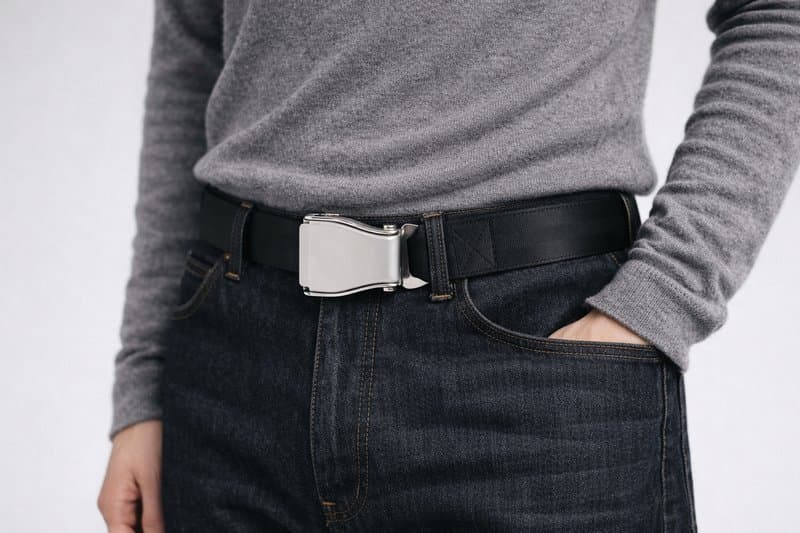


Eight routes. Eight belts. One buckle.
The same buckle mechanism as on board, machined in aluminium, in eight colours named after the routes that made aviation.
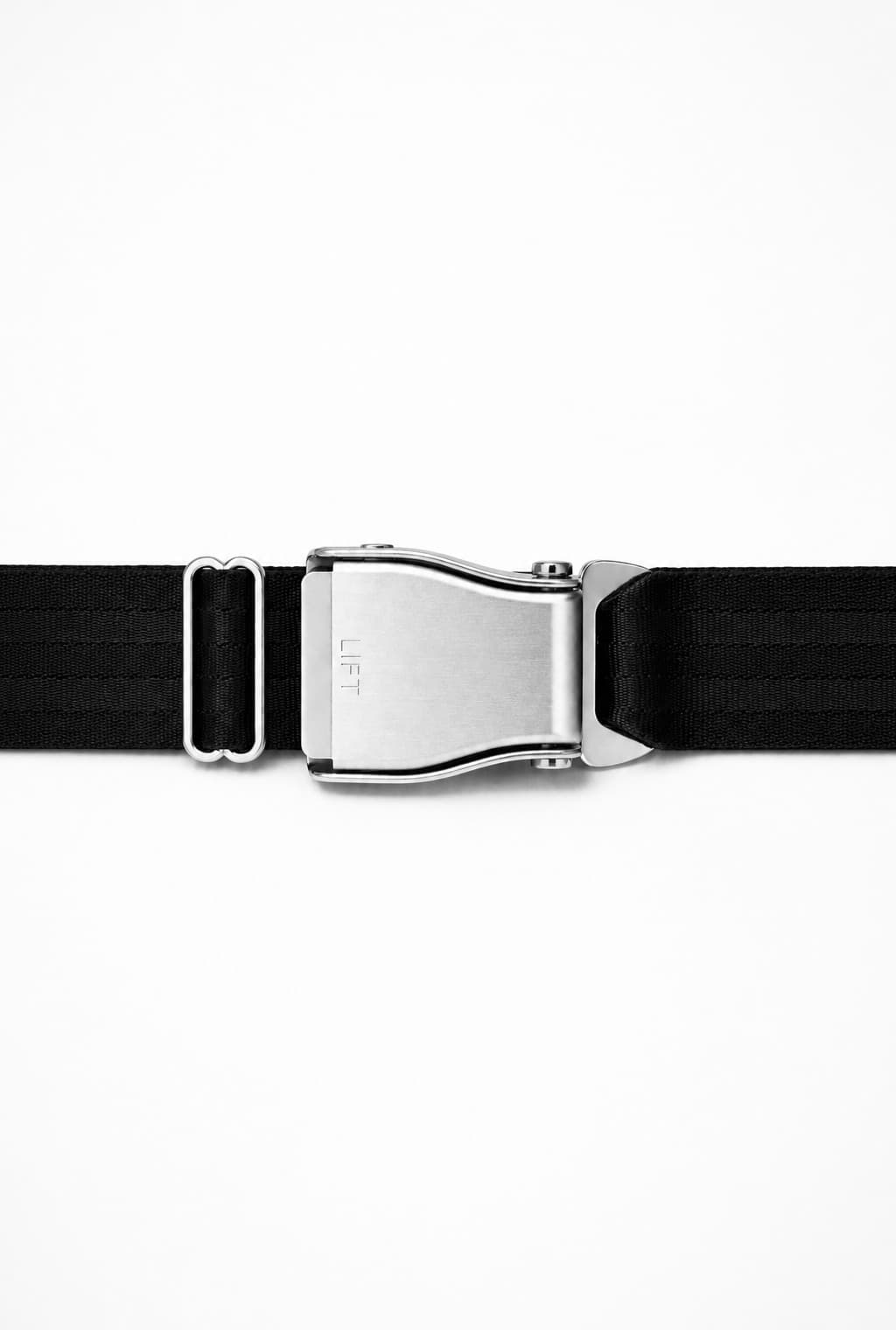
The Quiet Rituals of the Frequent Flyer
Those who fly often build a private operating system without realising it. The buckle they click in is older than most airlines. Fly-Belts brings it home with you.
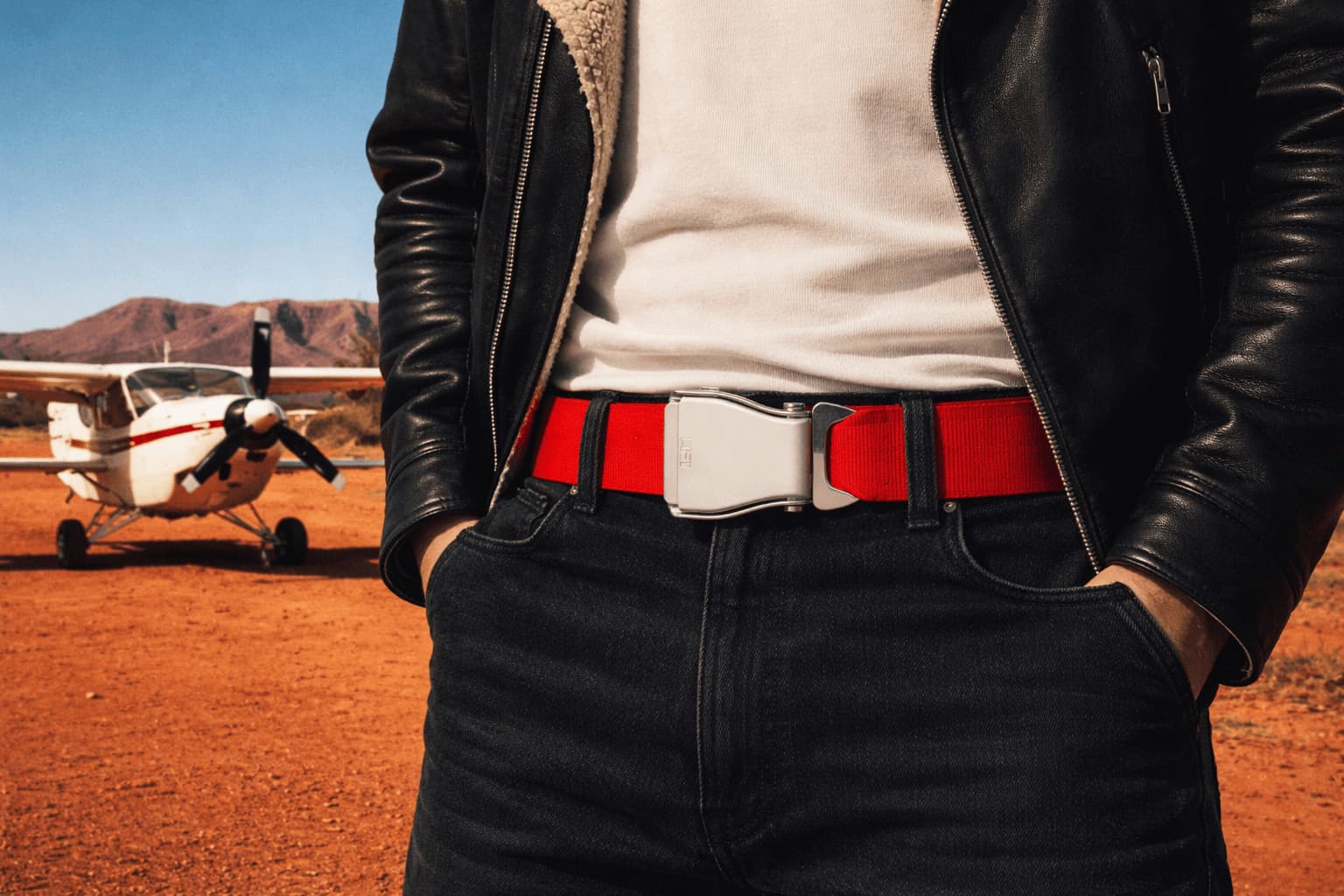
AUSTRAL Belt - The Australs - The Routes That Cross the Bottom of the World
A continent that sits a long way south of everywhere else. A century of aviation devoted to compressing that distance. The story of the Kangaroo Route - and the belt named after the red earth below it.